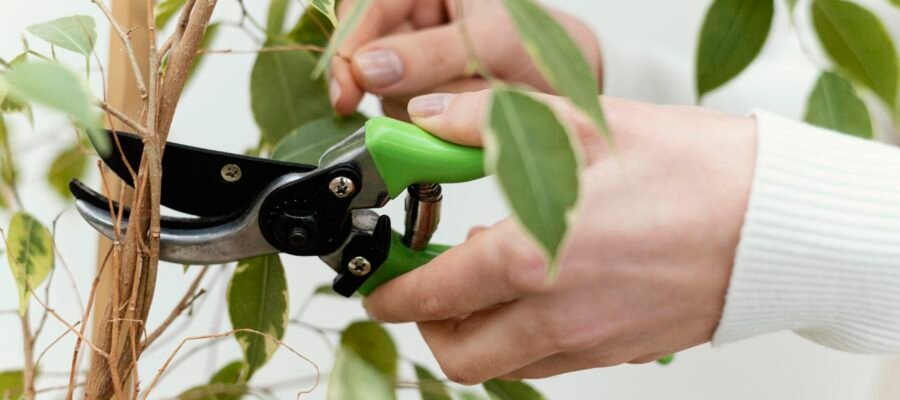
If you are a plant lover you will certainly have already tried multiply your best specimens with theirs reproduction by cuttings.
For many, this term might suggest a highly challenging method to implement: by strictly adhering to a few fundamental rules, even those who are not experts can achieve good results.
The first and essential advice is to always use healthy parts of the plant, clean tools And fresh sterile soil.
Leaf cuttings
“Leaf cuttings” refers to both petiole cuttings—where entire leaves are detached from the mother plant leaving the petiole—and leaf cuttings obtained by dividing a leaf into sections or separating its veins.
This is an easy operation to carry out at home, especially in summer, a period during which rooting takes place in about 3 weeks.
Leaf stalk cuttings
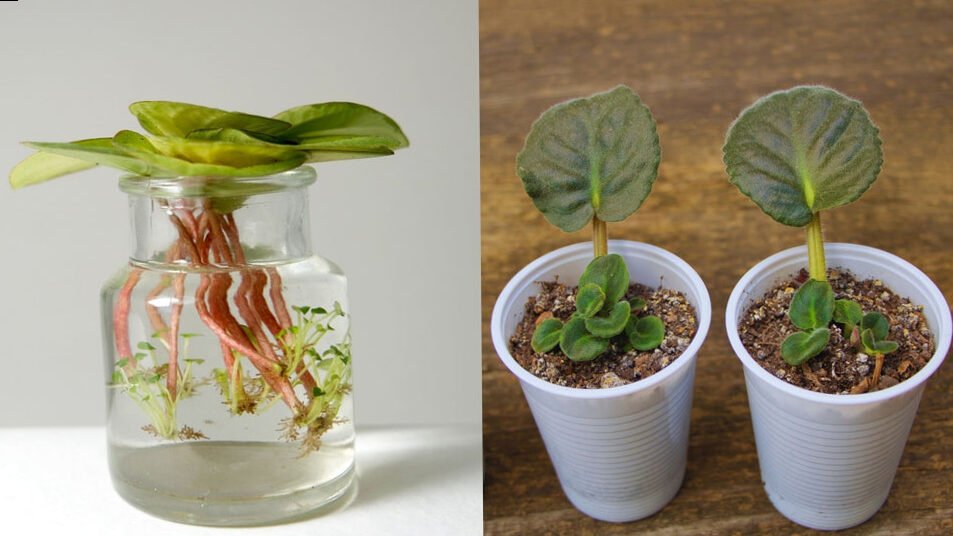
In leaf petiole cuttings, the leaves should be inserted into the soil for rooting with the stem planted halfway (3 cm is the ideal height). The shoots develop at the base; when the “old” leaf dies, the seedlings can be transplanted individually.
This is the recommended method for multiplying plants such as African violets (Saintpaulia), the crassulae and the Cape primroses (Streptocarpus).
Cuttings on the back of the leaf
Some plants naturally generate seedlings on the upper surface of their leaves. It is obvious that this form of reproduction is just a natural occurrence: Tolmiea (Tolmiea menziesii) exemplifies this.
Cuttings on leaf veins
A third method of propagation is to carry out some engravings in the main veins of the leaf, on the underside.
Here’s the way to proceed: cut the ribs using a clean razor blade and lay the entire leaf blade on the rooting soil, ensuring it stays well attached; fix the leaf in place with some hairpins and cover the vase with a plastic bag to keep the moisture in.
Maintain coverage until seedlings reach about 5 cm: at this point, let them settle in for a day without protection and finally transplant them.
The Cape violet and the broad-leaved begonia lend themselves well to multiplication with this method.
The leaves of plants like glossina and the Cape primrose can be cut into many small pieces and then buried vertically in the rooting soil, with the basal part—the incised side closest to the base—in the soil.
Generally, the cuttings must be sprayed frequently. However, begonia cuttings are particularly susceptible to mold; specimens that develop mold must be eliminated. The cuttings of Cape primrose and glossinia should not be covered with plastic; it is also advisable to let the soil dry between waterings.
Tips for selecting soil
Nurseries offer rooting soils that are formulated specifically for certain plants.
Alternatively, you can make soil at home by mixing equal parts of sphagnum and fine sand: the sphagnum retains moisture, while the sand provides drainage.
The soil used for rooting is usually low in nutrients, so for certain plants, it is recommended to add a liquid fertilizer diluted to half strength to promote callus formation (the tissue from which new roots develop).
As soon as the cuttings have rooted, it is important to transplant them into potting soil.
Advice on temperature and development times
All cuttings benefit from fresh on the surface and from heat at the bottom—something quite difficult to achieve at home.
One piece of advice is to place the pots on top of insulating material (to minimize heat loss), in a location with good ventilation.
The best results are achieved at a temperature of around 21°C, avoiding direct sunlight on the cuttings.
Regarding times: many types of cuttings can be carried out during the summer; however, for this type of reproduction, it is more recommended to intervene in spring.
So if you intend to try your hand at this particular technique, there isn’t much left to do: you can start thinking about which plant to dedicate to right now!
Ultimas Entradas Publicadas
4 reasons to adopt Philodendron brandtianum, the perfect houseplant!
Various models and big discounts in the summer sales: the deal of the day

Let’s talk about Christmas decorations

– Complete calendar of holidays and events

Our favorite seasonal rugs and design tips
The most inspiring Christmas gift perfumes 2025: ideas for him and her
Camellia sasanqua, winter flower – Online Plant Sales
What is happening to our Planet?
How to build a greenhouse for succulents: practical guide