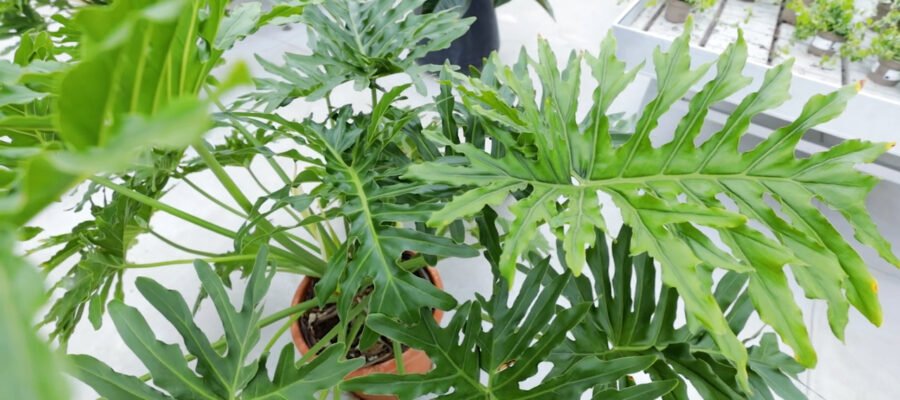
Thaumatophyllum bipinnatifidum is also known as Philodendron bipinnatifidum or Philodendron selloanum. This indoor plant really has many positive sides but my favorites are:
- Jungle effect guaranteed by the large leaves with an almost primitive appearance;
- it is an easy plant to care for;
- it ages well, over the years it will not lose its charm, on the contrary 😉
The ideal temperature of Thaumatophyllum bipinnatifidum
Thaumatophyllum bipinnatifidum is native to Bolivia, Brazil, Paraguay and Argentina.
In regions of South Africa and Australia, it is regarded as an ornamental garden plant, but it also appears in America, particularly in warmer regions like California and Florida, where it is viewed as a garden plant.
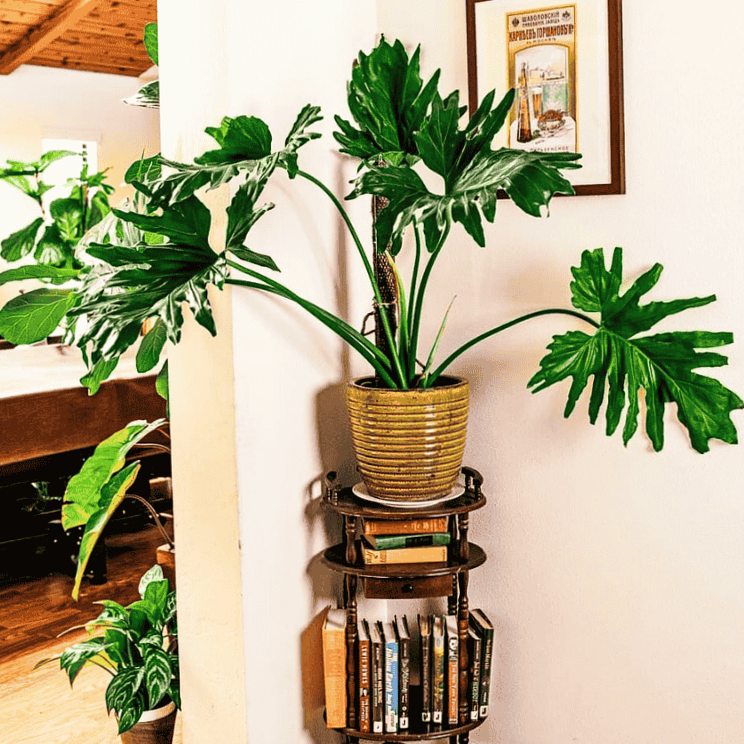
Described like this, Philodendron bipinnatifidum might seem like a plant to keep warm, but the big surprise for me was to discover that it can resist temperatures very close to zero. However, I would like to underline that even in this case, the important thing is to proceed… step by step! Taking the plant from inside the house and moving it outside when it is 3°C outside will not be a good choice; it is much better to follow the good rules of hardening (don’t you know them? Here’s the right article!).
Where to place the Philodendron bipinnatifidum
In its habitat it is possible to find the Philodendron selloanum also positioned in full lightmom tolerates and adapts to shade. Even at home it works very well in both exposures, but you have to take into account that the deep shadow of the jungle is not the darkness of the cellar, it’s fine to leave it in low light conditions but not in total darkness.
How to water Philodendron selloanum
Irrigations of Thaumatophyllum bipinnatifidum must be more frequent in the warm months (if you keep it outside you will see that in the summer it will need to be watered almost every day).
In the fall, when the plant is stopping, start water only on dry ground deep. Don’t be afraid to wait too long because in the worst case scenario, you will see the plant show the symptoms of withering and at that point you will still have time to intervene.
Fertilize Philodendron bipinnatifidum
For fertilizing Philodendron selloanum, I recommend Cifo fertilizer for green plants, from spring to the end of vegetation. Be careful because Philodendron bipinnatifidum is often described as a plant not very tolerant to high salinity rates in the ground so it’s better not to overdo it: maybe let’s go to halved doses and we stop in winter.
Tricks for the perfect care of Philodendron bipinnatifidum
I’ll reveal two tricks to see the Thaumatophyllum bipinnatifidum explode:
- Bio Oro combined with watering, a couple of times a month;
- although we have seen that it tolerates low temperatures, we may like to have it at home, or perhaps we don’t have great alternatives. But one holiday during the warm months even just on a small terrace in bright shade it will be perfect fuel.
Repotting Philodendron bipinnatifidum
Repotting Philodendron selloanum must be done annuallyand it is better to carry it out at the start of growth in spring but a check towards September may also be useful.
The ideal substrate for Philodendron selloanum
The soil, as long as we grow this Philodendron in a container, must have aggregates in mixture. As always my advice falls on the One line, in particular One plus.
Another trick that can make a big difference is to mix a couple of handfuls of Biotron (composed of lonardite, if you want to know more you can find all the necessary information here).
Parasites of Philodendron selloanum
Philodendron selloanum can be attacked by mites and scale insects.
It is very important to continuously monitor the Philodendron in case of mite attacks, and if infected, treat with this recommended mix:
There is also the option of using biological control methods, such as applying a mushroom inoculum, with my recommendation being Mebotrix.
However, for cochineal and thrips, the most effective solution is soft soap.
Systemic insecticides can also be very useful.
Symptoms and problems
The Philodendron may show some symptoms, let’s take a look at the most frequent ones!
- Yellow leaves
in this case the cause is probably excessive wetting, it is important to let the soil dry adequately before proceeding with the next irrigation. - Dots on the leaves
the causes can be very different: during the summer it is often a manifestation of too much light, but, in general, much more often, they are bites of phytomythial insects, which perhaps have already left when the spots appear.
Philodendron selloanum
Philodendron bipinnatifidum is a plant widely used in flowerbeds as a tall ground cover in countries where it is used as an outdoor ornamental.
Excellent in these cases is the Philodendron selloum “Little Hope”, an erect and compact plant, with large shield-shaped leaves of a beautiful bright greenwhich even it expands more than it grows. Sometimes the trunk crawls on the ground like a snake and develops sinuously close to the ground. Furthermore, once mature, the Philodendron Little Hope can produce spathes of white-green flowers which make it even more decorative. May require support.
The botanical nomenclature of Philodendron selloanum
We talked about botanical nomenclature and its importance, so let’s look at the origins of the name of this plant!
Heinrich Wilhelm Schott was one of the first botanists to describe the Philodendron genus, in fact all Araceae lovers will know him ;). In the past, the names “Philodendron bipinnatifidum” and “Philodendron selloanum” were understood as belonging to two separate species. Through recent studies, however, the aspect concerning the sexual characteristics has been explored in depth, which suggests that they are actually multifaceted of the same species.
Even more recently, another giant of botany, Simon Mayo, confirmed that it was the same plant presenting in two different forms.
Because the name Philodendron bipinnatifidum was the first of the two to be published in the literature, it was recognized as the scientific name.
Furthermore, both referred to the subgenus meconostigma which later became a distinct species with the name thaumatophyllum.
Some further curiosities about Thaumatophyllum bipinnatifidum
At the beginning of the article I said that ages well this is because its stems lengthen over time, presenting a typical livery designed by leaf scars. I love it when that happens! In an apartment it takes some time, but if you saw it in nature, you would notice that it grows relatively quickly.
The trunk is strong enough to hold the plant even as it attains significant heights. However, when it secures support, it also develops as an epiphyte.
It then sends out clusters of aerial roots downward that touch the ground: besides offering structural stability, they also assist in absorbing water and nutrients.
Ultimas Entradas Publicadas
4 reasons to adopt Philodendron brandtianum, the perfect houseplant!
Various models and big discounts in the summer sales: the deal of the day

Let’s talk about Christmas decorations

– Complete calendar of holidays and events

Our favorite seasonal rugs and design tips

The most inspiring Christmas gift perfumes 2025: ideas for him and her
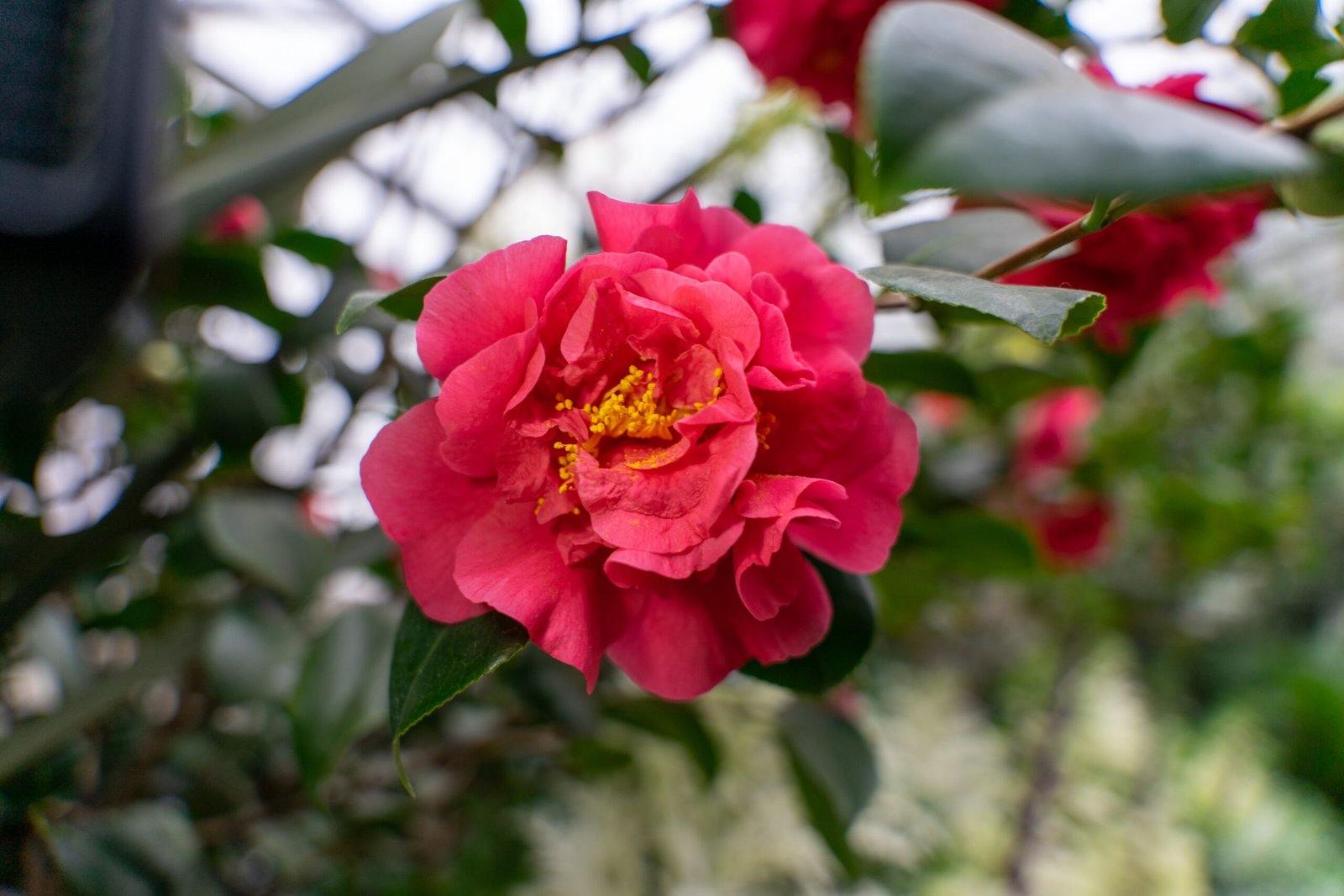
Camellia sasanqua, winter flower – Online Plant Sales
What is happening to our Planet?
How to build a greenhouse for succulents: practical guide