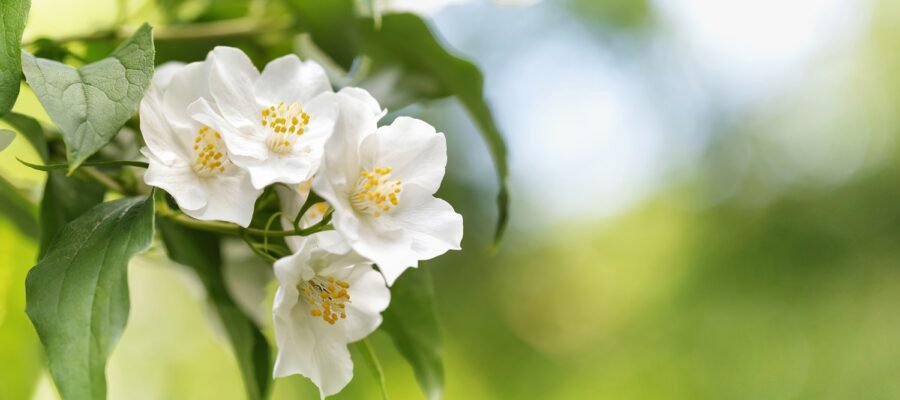
Being Spring, we are prepared to have our eyes filled with vibrant colors. Surrounded and almost slightly pampered by the pastel shades that the flowers adopt during this season.
However, today, while browsing among the most beautiful and unique plants, I chose to set aside the bright pinks, purples, and blues for a moment.
Remember when I mentioned Snowdrops to you? Today, the flowers we show you figuratively evoke their pure form.
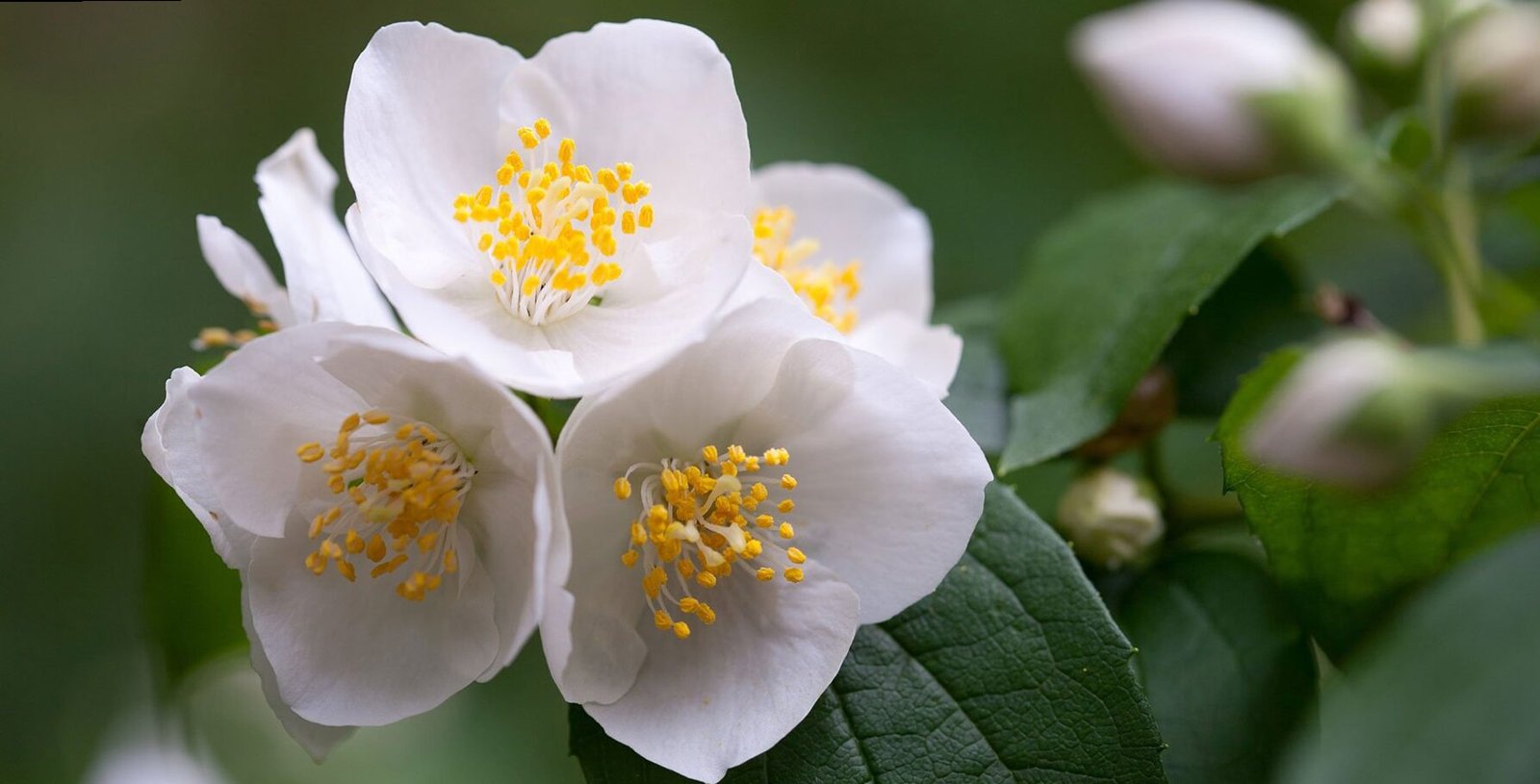
The name already indicates everything: Filadelfo. No, actually, it’s not just the name that reveals it; it’s his nicknames that best explain this plant, which is also called “Jasmine of the Madonna” or “Angel Flower”.
In short, isn’t this already enough to understand their essence? I’m sure you’re already beginning to perceive their scent in the air! So let’s get to know them better.
The Philadelphus plant
The philadelphus is an ornamental shrub from the Hydrangeaceae family that can range in height from 1 to 4 meters depending on the variety.
It is a plant that grows very quicklyit is therefore suitable for gardens that have large spaces, where the philadelphus can give its best.
Its appearance is delicate but distinctive: the green, oval leaves are adorned with plentiful pure white or cream flowers. However, don’t be deceived; despite its gentle look, this plant is hardy and resilient, displaying all the traits of rustic plants.
It blooms from May to June with white, cup-shaped flowers that are clustered together. The fragrance it emits is strong and delightful, sometimes reminiscent of orange blossoms.
The philadelphus is a deciduous plant, so it loses its leaves in winter.
Care and cultivation of the Philadelphus
If you already can’t wait to adopt this heavenly flower, here is all the information to take care of it.
But first, let’s clarify one question: in a pot or in the ground? Philadelphus can grow either way, although it is a shrub that does best in large spaces. In any case, the only specific thing to keep in mind, if you decide on the vase anyway, is to pay close attention to avoiding water stagnation.
Where to plant Philadelphus
Philadelphus loves sunny positions; however, it is adaptable and survives without problems even in dark areas half shade, where it will produce less abundant blooms. The variegated Philadelphus is useful in partial shade positions.
What temperatures does Philadelphus want
It is a summer plant, so it thrives in the heat, but it can also survive in the cold. To prevent issues during heavy frosts, it is advisable to mulch the plant’s base with dry leaves. It can still survive at temperatures of -15/-20°C.
Ideal terrain for Filadelfo
The Philadelphus will be particularly comfortable in loose, light, fertile and well-draining soil.
Give the Philadelphus a drink
Let’s recall once more that Philadelphus is a hardy plant, accustomed to surviving. Therefore, it can grow well by utilizing rainwater. During extended droughts, consider assisting it by watering generously to avoid the soil from becoming too dry.
Fertilize the Philadelphus
To achieve spectacular blooms, it is helpful to support the Philadelphus with proper fertilization. I apply a slow-release fertilizer designed for flowering plants in March, June, and September. Along with watering, I occasionally add a biostimulant, which enhances the quantity, shine, and fragrance of the blooms.
Pruning Philadelphus
Once the flowering period is over, it is the ideal time to proceed with pruning the Philadelphus. The operation that can be done is to trim and recompact the bush, in order to keep it in shape, while pushing the tillering. Normally, heavy pruning is not carried out unless you want to “rejuvenate” the wood. In this case, the most vigorous and oldest stems will have to be removed at the base (more or less removing 1 in 5).
Propagate Philadelphus
Pruning time is an excellent time to take some propagation material. Usually cuttings of soft wood (therefore of material that is still herbaceous) are the best for propagation via cuttings.
Propagate Philadelphus by cutting
- Take a cutting about 15-20 cm long, I usually leave 3 nodes (although it is already possible to do it with 2), possibly take it during the early hours of the morning, when the plant is still nice and fresh and turgid;
- remove the lower leaves and cut the upper ones in half (because the cutting does not yet have roots that allow it to absorb water and it is therefore useful to limit the surface of the leaves in order to reduce evaporation);
- insert the cutting into the pot with a light and preferably micronized soil (I recommend the excellent One plus);
- take care to keep the cutting moist while growing.
When propagating via cuttings it is advisable to take as many as possible to increase the chances of rooting.
Propagate Philadelphus by layering
Propagating Filadelfo through layering is very practical, in this article I had already revealed the secrets of this technique 😉
Propagate Philadelphus by offshoot
The offshoot is in fact a layering, except that instead of bringing the earth upwards we bring the branch downwards. So to make an offshoot, just take a branch, dig a small hole, bury a portion of the branch (perhaps decorticated), secure it with U-bolts so that it remains in the ground and then just wait for the callus to produce new roots.
Philadelphus parasites and diseases
Philadelphus is vulnerable to attack by aphids during the summer months and can also be subject to fungal diseases. For -almost- every problem there is a remedy, so don’t be afraid and, if your plant shows any symptoms, take action with specific products!
Is Philadelphus a pet-friendly plant?
Well yes. I’m sorry to say that this little angel hides a danger. For humans it is harmless but for our feline friends it could represent a real problem if ingested. We therefore advise those who host a cat in their home to avoid growing this plant, or to keep the two parts well distanced.
Language of flowers
The name of this flower, or rather, the nickname, is truly evocative. Yet it is not easy to understand what the origin is. Symbolism connects to memory and memories, but will that be all?
Its original name, therefore “Philadelphus” instead derives from Greek “fileo” what does it mean “I love” AND “adelphos” Meaning what “Brother“. We therefore read a clear reference to fraternal affection. Will it be the same with which these flowers grow next to each other? Who knows, the fact is that this message is already in the style of a plant that appears so sweet.
Philadelphus, whistles and whistles
No, no errors. The branches of this plant are used to create whistles and whistles.
But did you imagine it?
The Philadelphia of the Georgians
The Hydrangeaceae family includes more than 70 species and among these some are varieties of philadelphus. Which ones do we have here at Vivai le Georgiche? Let’s find out now! In the meantime, know that all philadelphus are shrubs grown for their generous scented flowering, to be used in woodland gardens, for flowering hedges or as focal plants.
- Filadelfo “Belle Etoile”
- It produces white flowers with a very fragrant purple-red heart;
- Very rustic, it blooms best in a sunny position;
- It can reach up to 2m in height.
- Philadelphus “ermine cloak”
- It produces large, highly scented cream-white double flowers;
- Very rustic, it blooms best in a sunny position;
- It can reach up to 1m in height.
- Philadelphus “Minnesota Snowflake”
- It produces large, highly scented double white flowers;
- Very rustic, it blooms best in a sunny position;
- It can reach up to 2m in height.
- Filadelfo “Snowstorm”
- It produces very fragrant snow-white flowers;
- It flowers best in a sunny position;
- It can reach a height of approximately 2.5m.
- Philadelphus “Virginal”
- It produces double white flowers;
- Very rustic, it flowers best in a sunny position;
- It can reach a height of approximately 2.5cm.
- Philadelphus coronarius
- It produces very fragrant creamy white flowers;
- Very rustic, it blooms best in a sunny position;
- It can reach a height of approximately 3m.
The philadelphus is therefore a somewhat unusual flower. It is not so much for some of its hidden characteristics, but more for the calm reserve it presents despite being a summer plant. As we said before, it reminds us a bit of snowdrops. This plant also seems to bring a bit of winter with it, making a scorching summer cooler. Despite this, however, it does not neglect to be decisive and fragrant, bringing with it the scent of a sunny morning!
Ultimas Entradas Publicadas
4 reasons to adopt Philodendron brandtianum, the perfect houseplant!
Various models and big discounts in the summer sales: the deal of the day

Let’s talk about Christmas decorations

– Complete calendar of holidays and events

Our favorite seasonal rugs and design tips

The most inspiring Christmas gift perfumes 2025: ideas for him and her
Camellia sasanqua, winter flower – Online Plant Sales

What is happening to our Planet?
How to build a greenhouse for succulents: practical guide