
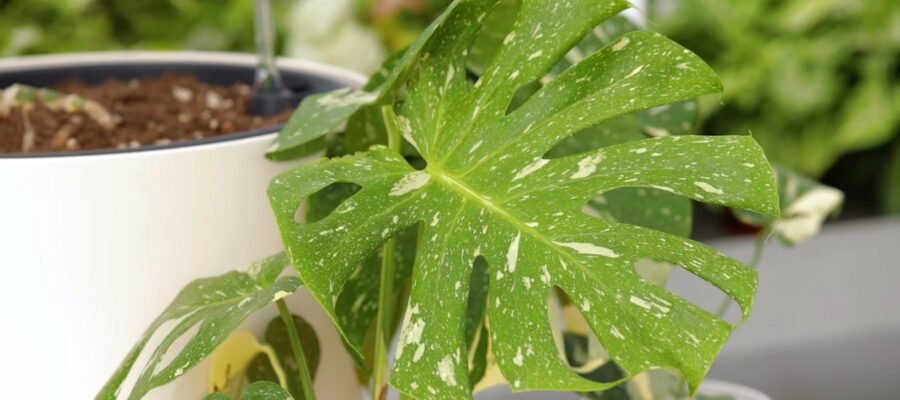
The Monstera “Thai Constellation” is a tropical evergreen climber with stunning heart-shaped leaves, speckled with white. From its name, you can already appreciate the beauty of this unique plant, as the cream spots create a pattern on the leaf that resembles a constellation. So, let’s explore all the aspects of caring for Monstera variegata and how to grow it successfully.
What exposure to give to the Monstera “Thai Constellation”
If kept indoors, it prefers exposure to direct light outside; however, it will always favor direct light until May, providing very bright shade conditions during the warmer months. Variegated plants are sensitive to extremes: excessive shade is not ideal, just as too much light is also detrimental.
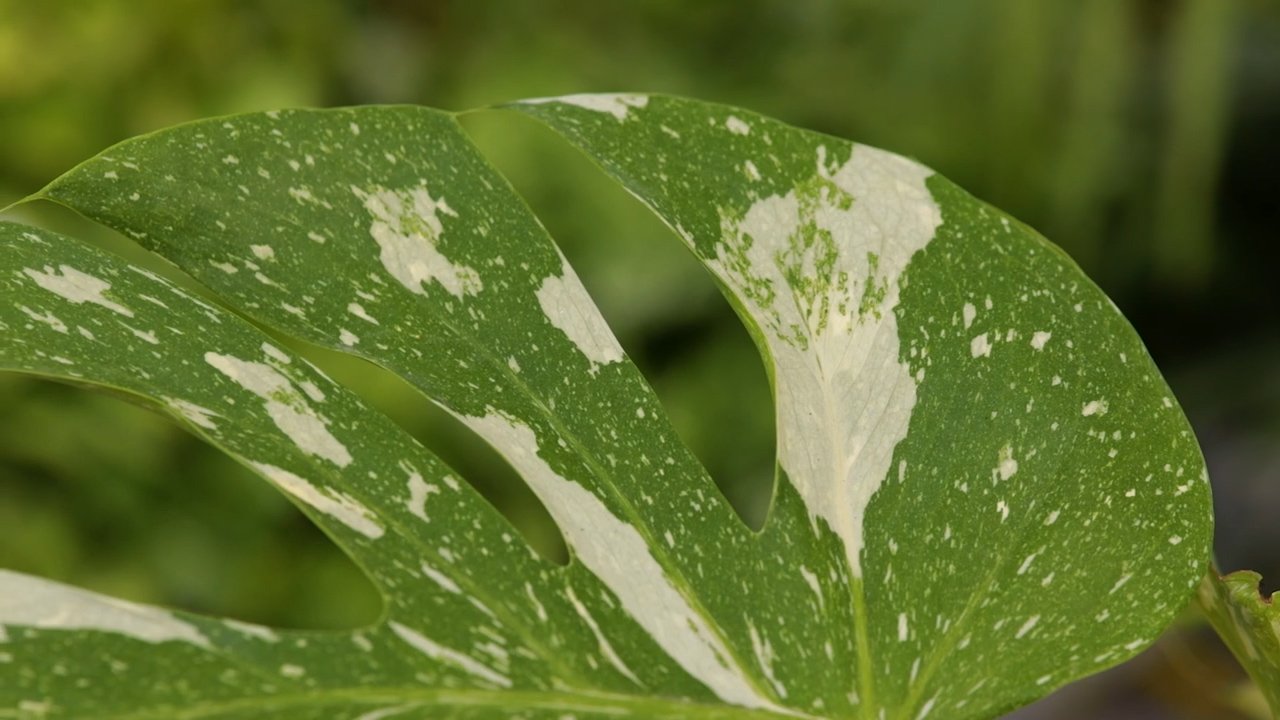
The Sunlight is essential when it comes to maintaining the variegation of the leaves. The white areas that characterize the variegation itself are devoid of chlorophyll and, consequently, are not able to carry out photosynthesis, generally reducing the photosynthetic capacity of the plant itself. If light levels are too low, the plant will begin to increase the amount of chlorophyll to try to compensate, causing the entire blade to turn green, thus removing the variegation. For this reason, it is essential to never let the plant lack the right light.
What temperatures does the Monstera “Thai Constellation” want?
This plant resists up to minimum of 10/15°C. During the warm months it benefits from being taken outside, taking care to harden off well.
How to water the Monstera “Thai Constellation”
During the summer season the Monstera “Thai Constellation” loves frequent wettingespecially if it is outside. In winter, however, reduce the watering and for indoor plants, before carrying out the new watering, it is better to make sure that the soil is completely dry. If using pots with a water reserve in winter, we recommend not continually topping up the water but leaving periods in which the soil can remain completely dry.
Pay close attention to waterlogging which could cause root rot.
Which substrate to choose for the Monstera “Thai Constellation”
Prefers terrain well draining with coarse aggregates (preferably pumice stone), with acidic, alkaline or neutral pH. Mixtures with peat or wood fiber are fine.
As always, we recommend the excellent One+.
How to fertilize Monstera “Thai Constellation”
The ideal is to add liquid fertilizer for green plants to the wetting water or a fertilizer administered via the leaves, ideal in the case of cuttings or cultivation in pots with Elho water reserve.
As always, the plant will also benefit from the addition of a biostimulant, in particular Bio Oro.
How to Propagate Monstera “Thai Constellation”
Propagation can be done via node cuttings in summer or by layering in autumn. Cloning the plant, such as the Monstera Albo Variegata, is the only way to preserve the genetic mutation that determines such spectacular variegations.
When to repot Monstera “Thai Constellation”
The ideal for the Monstera “Thai Constellation” is to proceed with two repottings a year: the first at the beginning of spring and the second at the beginning of autumn.
Parasites and diseases of the Monstera “Thai Constellation”
Monstera “Thai Constellation” may be sensitive to scale insects, thrips and red spider mites.
Emergency mix
In the presence of cochineal, quickly take action by combining the following products in 1 liter of water:
* doses refer to the products of the line My organic garden.
To extend the protection period for the plant, it is advisable to proceed with applying a natural covering mixture. Mix in one liter of water:
Distribute the solution over all the vegetation, making sure to also cover the lower sides of the leaves. Repeat the treatment if it rains and, in any case, every 5-7 days until the infection is gone.
For red spider mites, we suggest using this mixture:
Leaf necrosis due to lack of light
Brown leaves with “crispy” edges
This is usually a symptom of water shortage.
Yellowed leaves or black stems
Unlike before, these are indicators of excess wetting.
Necrosis on leaves
These necroses, which are concentrated above all in the parts of the variegations, are often due to the lack of light.
Wilted leaves
If the leaves of Monstera “Thai Constellation” appear drooping, the plant is probably not receiving enough water.
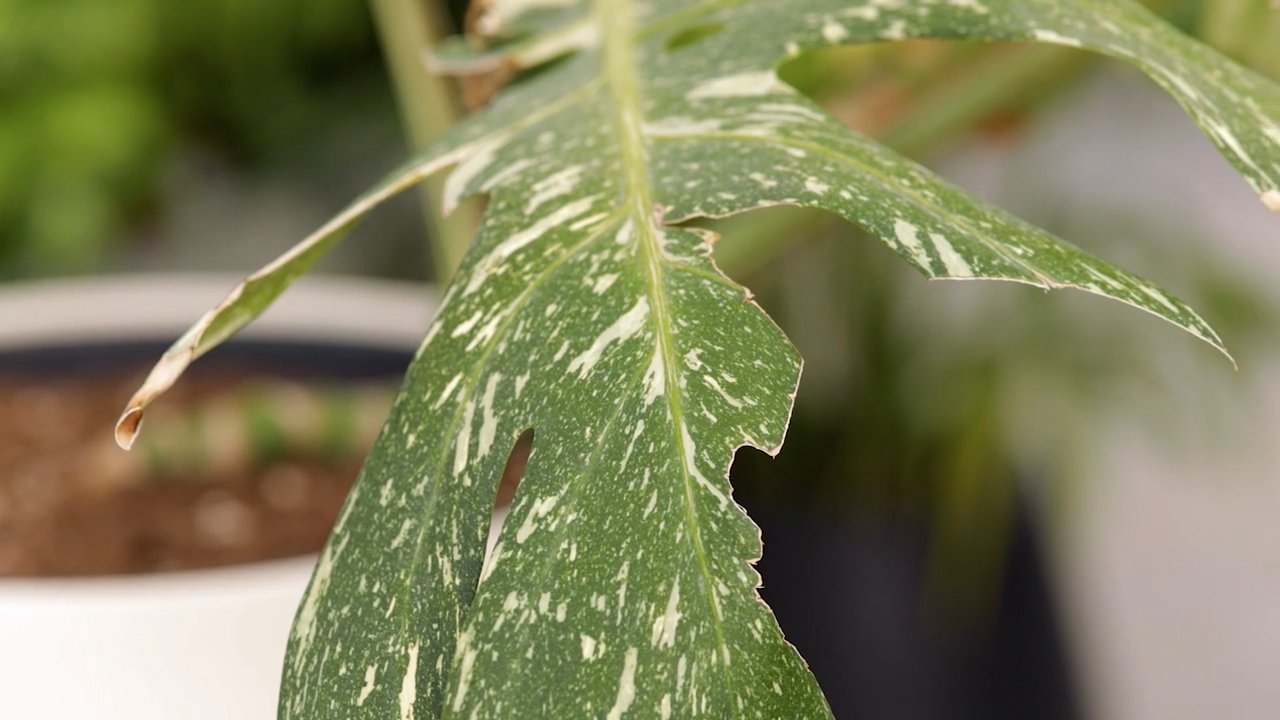
The Monstera “Thai Constellation” is a tropical evergreen climber, characterized by a slightly slower growth than other Monsteras (while remaining fast-growing when compared to most houseplants). Growth is fast, in summer, every 2 or 3 weeks, if well maintained it launches a new leaf.
The variegations, if the plant is kept correctly, will not be lost.
The leaves, once unfolded, are heart-shaped, pinnate and often perforated, of a beautiful intense green, with creamy white spots and/or streaks. Why do they crack? There are many hypotheses: limit the wind resistance of the leaves, allow light to reach even the lowest leaves, for the same square centimeters of leaves, by making these cracks, the area covered by the leaf is greater and therefore the possibility of intercepting the light rays increases.
The cream-colored, non-white variegation also acts as protection from light, making the plant less sensitive to burns.
It reaches a maximum height of 2.5/4 m and a spread of 1.5 to 2.5 m, dimensions which it reaches in 10/20 years.
Taxonomy
It is part of the Araceae family.
Etymology
The name “Thai Constellation” is due to the fact that the genetic mutation that distinguishes this plant was originally selected in a Thai laboratory, to then be propagated in vitro (micropropagation) and spread throughout the world.
The Monstera “Thai Constellation” is not pet-friendly
If ingested, Thai Constellation can have harmful effects and can also irritate the skin and eyes.
Ultimas Entradas Publicadas
4 reasons to adopt Philodendron brandtianum, the perfect houseplant!
Various models and big discounts in the summer sales: the deal of the day

Let’s talk about Christmas decorations

– Complete calendar of holidays and events

Our favorite seasonal rugs and design tips

The most inspiring Christmas gift perfumes 2025: ideas for him and her
Camellia sasanqua, winter flower – Online Plant Sales

What is happening to our Planet?
How to build a greenhouse for succulents: practical guide