
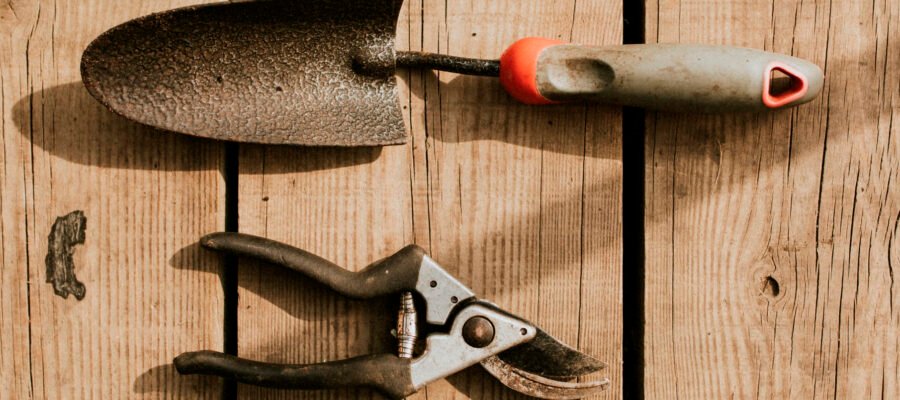
Often, when we discuss different pruning or propagation operations, we emphasize the importance of using clean tools. Maybe this is something that those more experienced with plants might overlook, but what if it isn’t?
Not long ago, we explored the world of phytoviruses, and here, rightly, many of you asked us, “how do we sterilize garden tools?” Well, here we are; the time has come to find out.
Why should I clean garden tools and containers?
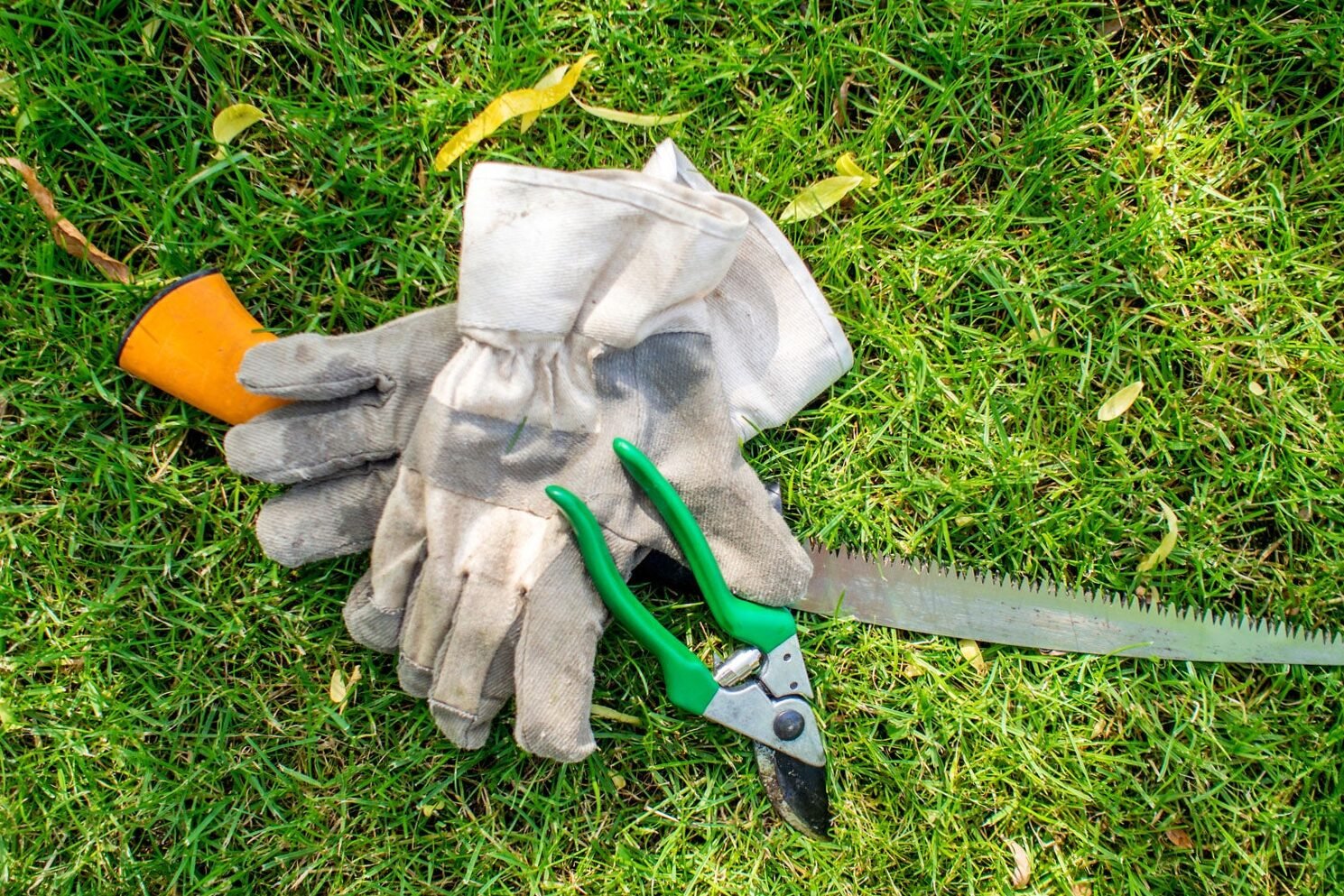
When plants exhibit symptoms of disease, it is advisable to prune the affected, damaged, or dead plant tissue. This action, which can save one plant’s life, might also lead to the demise of another. In reality, the pathogens responsible for the disease can utilize the tools— as well as soil fragments and plant debris like roots caught in a rake, sap residues left on scissors, or soil in an old vase— as a means to infect other plants. Plant pathogens such as bacteria, fungi, and viruses are responsible for diseases that can ultimately kill plants.
Sometimes it is simple to identify what requires cleaning, but numerous pathogens are microscopic, such as tiny phytoviruses, so a surface may appear safe when in reality, there is still a problem.
Hence, disinfecting tools and containers helps to stop the transmission of diseases among plants, while also ensuring their proper operation and avoiding rust.
Cleaning, disinfection, and sterilization
Before proceeding, let’s clarify these three terms, which may seem similar but are actually two very different concepts.
Cleaning entails the physical elimination of soil and debris and is, as we will observe later, the step prior to disinfecting instruments.
Disinfection, on the other hand, involves the potential removal of very, very small agents, such as fungi, bacteria and viruses.
Finally, sterilization is a much more profound action, aimed at eliminating almost all microorganisms, whether negative or positive.
When should tools be cleaned?
Generally, every time it is used it would be ideal to carry out a correct cleaning, but we understand that for reasons of time and sometimes patience, this is not possible.
So here are the situations where correct sanitization (not just rinsing with water or brushing off any remaining soil) becomes essential:
- In the fall, before putting away the tools for the winter;
- in spring before using them if you forgot it in autumn 😉
- After working on an infected plant or in any case before moving on to the next;
- After using the tools in another garden;
- Before using the same tools used with outdoor plants as with indoor ones
A clarification must be made: the symptoms of a disease are not always immediately visible on plants, so it could be difficult to understand when you run the risk of acting as an Uber for an unfriendly phytovirus. Just think that growers usually go around with a bucket full of disinfectant, where they immerse the tools they are using as they move from one plant to another to avoid any risk!
Clean tools well before disinfecting them
It seems like a trivial note to make, a bit like when you vacuum the floor before washing the floor, well, here you have to do “the same”. Dirt and debris left on tools will interfere with the disinfection process and reduce its effectiveness, so it is really important to remove all visible dirt (leaf edges, soil, etc.) first. Here are some tips!
- Soap and water are excellent for eliminating most residues;
- On rough surfaces it is useful to use a stiff brush to clean more effectively;
- A rather strong spray of water or one carried out with a pressurized sprayer will remove encrusted dirt and enter even the narrowest spaces (where possible it is better to directly dismantle the various pieces to be able to clean in the most hidden places);
- Most of the wood used for planters naturally repels bacteria and fungi, but can get dirty, in this case it will be sufficient to use warm water and soap, then leave to dry and, if necessary, add some wood preservative.
Useful disinfectants
Now that we’re clear on why and when, let’s actually move on to the most practical question of all, the “with what?”.
There are many types of disinfectants on the market, but not all are effective and not all are suitable, so let’s delve into an overview of the main options available!
Be careful with disinfectants
Before continuing, however, it is essential to say that the chemicals used to disinfect can have harmful fumes and burn the skin. It is therefore very important to first read the label of the chosen product and observe the instructions regarding use, the possible need to wear personal protective equipment and, subsequently, how to dispose of the bottle.
In the meantime, the advice we can give you here is the basic one: keep these products out of the reach of children, store them in dry places with stable temperatures, never mix disinfectants with other chemical products and, in case of ingestion or contact with sensitive body parts, if necessary, contact your doctor.
Sanitizers specifically for plants
There are special sanitizers on the market made specifically to carry out the correct sanitization of the equipment, naturally these products are optimal and to use them best just read the instructions on the bottle or contained in the box. However, most people use common household items to sterilize tools, each with its own pros and cons.
Since the dawn of time, the use of fire has been a fundamental aid to life, even when it comes to disinfection there are no differences.
Fire is such a profound form of sanitization that used optimally it leads to complete sterilization, although this is not relevant as far as plants are concerned.
Contraindications:
- Some unburned particles could deposit on the blades, compromising their sharpness;
- very high temperatures could cause serious damage to the materials;
- risk of getting hurt.
Thermal disinfection is usually done using a lighter or even a home stove.
Bleach
Bleach is a household product, common and cheap.
Contraindications:
- It can damage tissues;
- Over time it corrodes the metal and is not recommended for pruning and cutting tools that require a sharp edge as it can create grooves or dent the metal;
- It must be disposed of with caution, absolutely avoiding emptying the remaining contents into the garden itself.
Ideal for:
- Large hand tools such as shovels, spades and rakes;
- poles, trellises, tomato cages and large containers.
Create a solution with 10% bleach
- Mix one part bleach with 9 parts water in a plastic container large enough to immerse all or part of the equipment to be disinfected;
- Never mix bleach with anything other than water or laundry detergent, as it may generate toxic gases that are dangerous to your health.
How to use the 10% solution
- Clean all visible dirt;
- soak, wet or spray the tools with the 10% bleach solution, this will kill fungi, bacteria and viruses in seconds;
- turn the treated utensils upside down so that all parts are treated;
- let the equipment dry completely;
- rub metal utensils with a few drops of linseed oil or mineral oil to lubricate them better. Do not use engine oil as it may transfer to the plants. If there is rust, use steel wool or a wire brush to remove it and then proceed with lubrication.
Isopropyl alcohol, 70% concentration
Alcohol is flammable, so some caution should be used in its use. According to the Center for Disease Control (CDC), isopropyl alcohol in concentrations of 70% or higher will disinfect surfaces of bacteria, fungi, and viruses but may not effectively disinfect pruning tools used on apple trees infected by fire blight. It is one of the preferred solutions for those who work in the green world.
Concentration 70% or higher
- Check the label to verify the concentration;
- do not dilute.
Ideal for:
- Manual pruners
- small hand tools.
How to use it:
Soak, clean, or spray hand pruner blades with alcohol.
Household cleaners
Household cleaners are generally more expensive than alcohol and bleach, but they have the convenience of always being at hand and even using them in diluted form will be enough for them to work. In particular, products bearing the heading medical-surgical aid should be used.
However, there is a big “BUT”, the but in question is that the effectiveness of these products on plant pathogens has not been scientifically determined, although many gardening experts recommend their use.
Finally, attention must also be paid to the corrosiveness of these products, so that they do not damage the tools.
Tea tree oil
Some time ago we got to know the Tea tree or Melaleuca alternifolia (if you don’t remember click here to learn more), among the products deriving from this plain we find Tea tree oil which, despite being a natural product, has excellent disinfectant capabilities!
It does not corrode tools and performs a lubrication function.
The big downside to this method is the price, which is decidedly above average compared to all other products.
Hydrogen peroxide
Excellent solution, already at 10 volumes it gives good results.
However, it should never be mixed with other disinfectants, as it would lose its concentration.
Over time, hydrogen peroxide corrodes metal.