
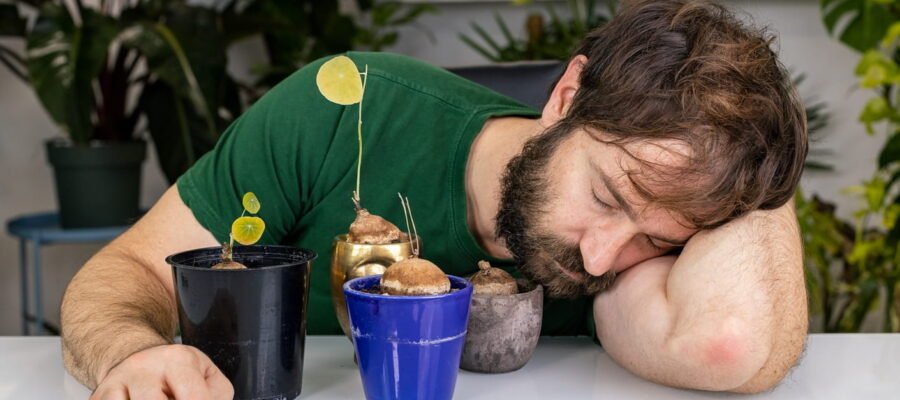
SOLUTION: If the season is autumn or winter, there is no need to worry: the plant is entering vegetative rest.
HOW TO ACT:
- Administer the final watering with added fertilizer.
- Wait until the last leaves fall and the soil is entirely dry.
- Suspend watering until spring.
- Once stripped, keep the bulb in the pot protected from frost (possibly above 10-15°C).
- It can be kept in the position it was in, but it is not necessary to provide light as long as there are no leaves.
- In March, return the bulb to a bright position if it has been moved
- Wait for the green buds to appear on the top of the bulb
- When the shoots reappear, water again by adding fertilizer
Stefania Pierrei (commercially known by the obsolete name of Stephanie stood up) is a perennial plant, equipped with a caudex or caudex (improperly called ‘bulb’). Its annual cycle includes a vegetation phase (hot season) and a dormancy phase (cold season). In our latitudes, dormancy is triggered as autumn approaches. For this reason, it is normal for the leaves to start yellowing in October-November and then lose them once they dry.
The vegetative rest phase is crucial because it enables the plant to survive a challenging period characterized by low temperatures, especially when the available light is considerably less than during the hot months. Dormancy also helps Stephania erecta gather reserves for spring, which supports it in producing abundant and lush growth.
STEPHANIA ERECTA LEAVES WHICH TURN YELLOW: HOW TO WATE STEPHANIA ERECTA DURING THE STARTING PHASE OF VEGETATIVE REST
When the leaves turn yellow, we provide a final watering combined with fertilizer for green plants or succulents. We then cease all watering until spring, when new shoots emerge.
ATTENTION: ensure the soil is dry when Stephania erecta has no leaves. If moisture persists, try to place it in light and at a mild temperature to assist in drying.
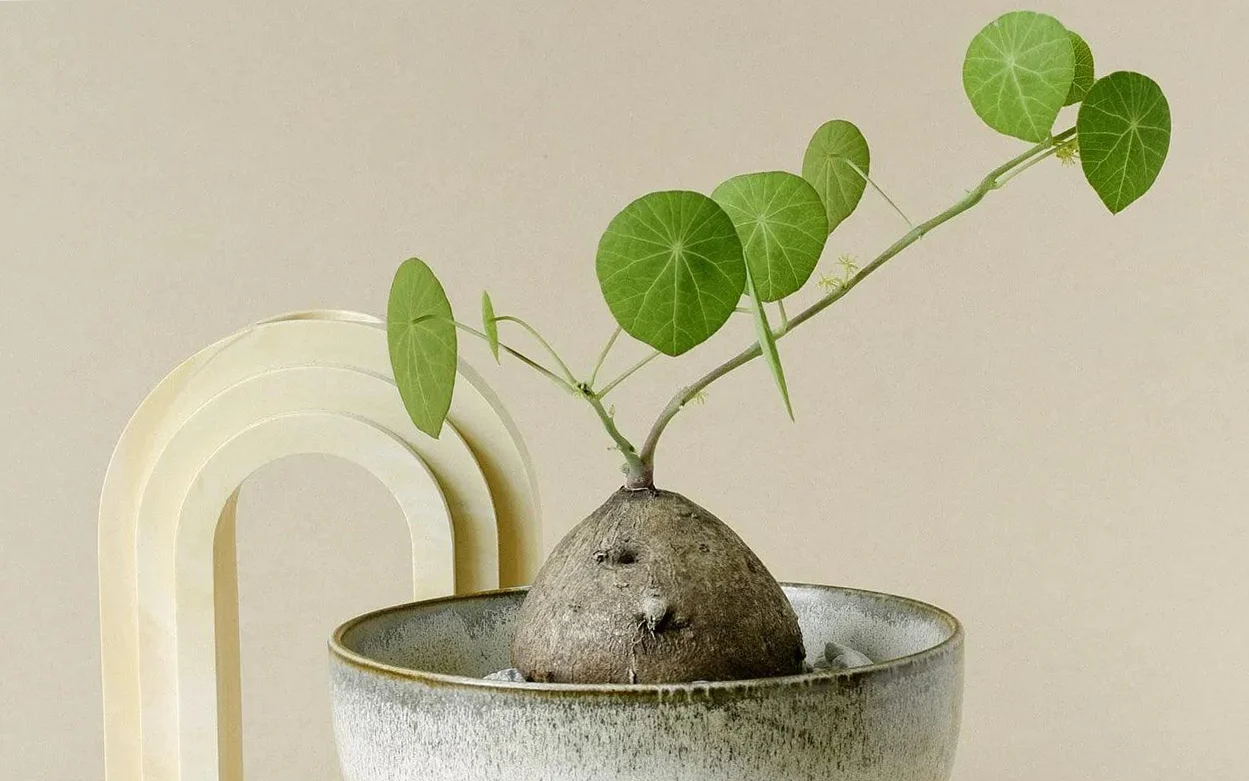
My recommendation is to avoid removing any leaves until they fall off naturally. When the color changes, the caudex reabsorbs all the nutrients and chlorophyll still in the leaf blades, so it is best not to cut them.
HOW TO PROCEED WHEN STEPHANIA ERECTA IS BARE
When the leaves have fallen or are completely dry, it is advisable to proceed with cleaning the dry leaves: with scissors sterilized by flame or alcohol, we remove the dried stems from the base. If some stems are still green, my suggestion is not to remove them: sometimes they can retain axillary buds capable of generating new vegetation in spring.
STEPHANIA ERECTA LEAVES WHICH TURN YELLOW: HOW TO MANAGE LIGHT EXPOSURE DURING THE VEGETATIVE REST OF STEPHANIA ERECTA
Since it is leafless during this period, the plant does not require light for photosynthesis. Therefore, placing it in a particularly bright spot is not necessary. We can choose to keep Stephania erecta in its current position or relocate it.
WHAT TEMPERATURE MUST STEPHANIA ERECTA HAVE DURING THE DORMANCY PHASE
It is enough that the temperature remains mild (above 10-15°C) and that the plant is not subjected to external cold or, worse, frost and humidity. We place Stephania erecta in its usual spot or choose a dry and temperate location. Ideally, the temperatures inside the home are ideal.
HOW TO RESTART STEPHANIA ERECTA VEGETATION IN SPRING
Stephania erecta will start to grow new foliage on its own when the temperatures in spring become suitable. It is beneficial to position the plant in a bright spot once more at that time. When the initial shoots emerge, we can resume watering Stephania erecta, this time adding fertilizer suitable for green plants or succulents to the watering.
SHOULD I REPOT STEPHANIA ERECTA DURING REST OR AT RECOVERY?
Stephania erecta dislikes repotting, and its root system develops very gradually. I highly recommend avoiding repotting during the rest period, and the need for repotting during the vegetative growth phase should be carefully considered. The best interval for repotting Stephania erecta is every three years.