
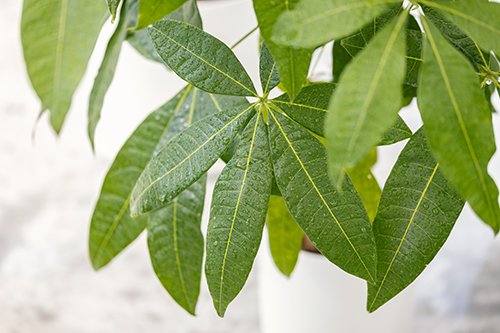
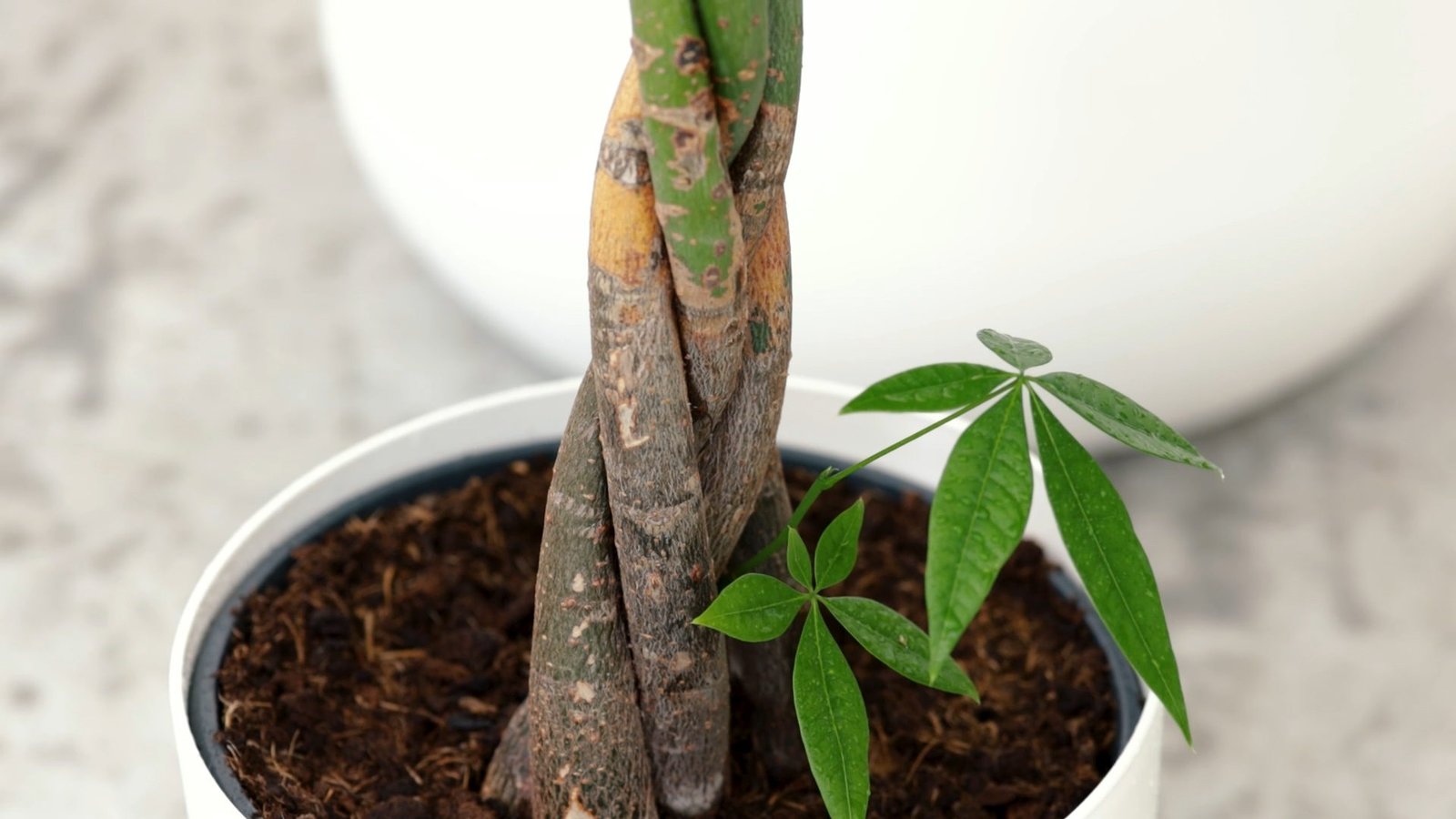
The Pachira aquatica, also known as the “money tree” or “Guyanese chestnut” is a tree that is usually found intertwined with multiple specimens to create a very particular trunk texture.
It might seem like a fragile and delicate plant from its appearance, but with a little attention, it won’t cause any problems; on the contrary, it will be ready to furnish in a truly particular way 😉
Care of Pachira aquatica
Pachira aquatica is an excellent ally even for novice green thumbs, thanks to its good rusticity it won’t be too easy to cause it problems 😉
Pachira exhibition
In summer the ideal light for Pachira aquatica is widespread and indirect. In winter, however, abundant light can be given, even direct.
What temperatures does Pachira want?
The Pachira it can withstand minimum temperatures of 10-15°C, it can therefore be cultivated outdoors during the hottest periods but with the arrival of autumn it is then better to put it indoors.
The ideal range is 18-24°C.
How to water Pachira
In summer it is important to water regularlyavoiding the soil from drying out, while in winter it is recommended to wait until the first centimeters of soil have dried before proceeding with a second irrigation.
However, be careful not to be fooled by the name, it is not an aquatic plant, so you absolutely must not overdo it with watering.
Which substrate to choose for Pachira
Pachira prefers quality mixtures lightened with aggregates. It has no particular requirements on the pH which can be acid, alkaline or neutral.
Recommended: One+
The ideal fertilization for Pachira
For Pachira, monthly fertilization with liquid fertilizer for green plants is recommended during spring and summer, therefore during the vegetation phases. During the rest of the year, however, fertilization can be reduced.
On this plant it is recommended to use half the strength of the fertilizer, then adding a little water to dilute it compared to the doses indicated on the label.
Propagation in Pachira
It is possible to propagate Pachira aquatica by seed, cuttings (in spring or summer) and by air layering.
Prune the Pachira
Pruning can be done in spring by cutting shoots as needed maintain size you want.
Pruning the lower leaves of the plant can also help encourage the growth of new leaves at the top.
Repotting Pachira aquatica
Repotting this plant is usually not necessary unless you want it to get bigger. If you want to preserve its size, avoiding repotting is an excellent way.
Otherwise, if necessary, switch to a slightly larger pot.
Pachira parasites and diseases
It can be subject to attacks by scale insects, red spider mites and aphids.
An emergency mixture consisting of: 10 ml of soft soap + 250 ml of Nettle + 10 ml of Neem Oil, all dissolved in 1 liter of water, is excellent against aphids and scale insects.
Description
Pachira aquatica is a evergreen tree grown as a houseplantoften with several plants intertwined with each other. Initially the stems are bright green, then they become grey-brown. The leaves are large, shiny, a beautiful dark green and are characterized by five or more lanceolate leaflets.
In tropical forests this plant can reach 20m, but in a pot it will rarely exceed one and a half metres.
The trees that have reached maturity produce spectacular flowers with 5 cream-colored petals, 30 to 200 cm long with multiple golden and crimson stamens, followed by fruits that can contain up to 25 nuts.
Taxonomic description
It is part of the Malvaceae family.
Habitat
Pachira is native to Central and South America.
Pachira aquatica is pet-friendly
As reported by the ASPCA, Pachira is not toxic to dogs and cats!
Curiosity
Pachira initially became famous in Taiwan during the 1980s and is widely used by those who practice feng shui to increase positive chi or energy within the home.