
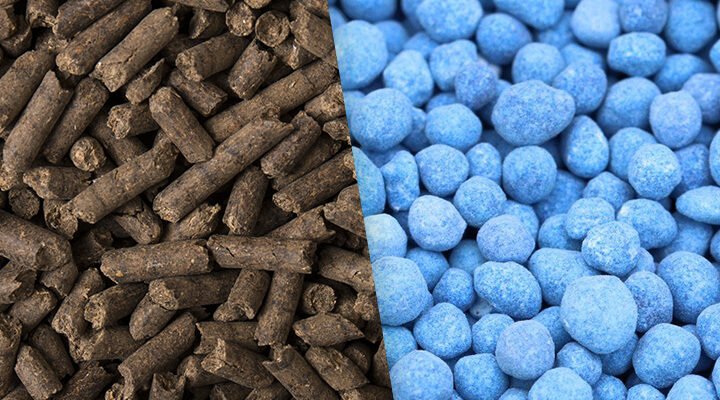
What makes tropical and mountain forests so lush? Why do the plants there thrive without fertilizer? We’re used to regularly fertilizing plants, but nature has its own mechanisms, and the answer lies in the so-called organic cycle. The main difference between mineral and organic fertilizers lies in their origin, composition, and role in the soil and plants. So, which fertilizer should we choose: organic or mineral? Let’s explore.
What is organic matter?
Organic matter in soil includes all living (roots, animals, and microorganisms) and decomposing (plant and animal remains) soil material, as well as all biologically derived products, such as animal excrement.
Decomposing organic matter is broken down by various organisms. Take a dead leaf as an example: it will be decomposed by insects, fungi, and bacteria until only the final residue remains. Anyone who has observed this process knows that organic starting materials transform into soil-like substances over time.

Humification and mineralization
The fate of the dead organic substance is that of go through transformation processes which break it down into increasingly minute and less complex compounds. One of the intermediate stages of this process is thehumification which transforms it into one of the most active components of the soil: humus. Further transformations will lead the organic substance to mineralize, that is, to transform into simple mineral elements, capable of being absorbed by plants.
To simplify: if you place a dead leaf on the garden bed it cannot be food for the plants; it will have to undergo a (more or less slow) process of mineralization in order to be transformed into nourishment.
A continuous cycle of mineralization
In natural environments, such as forests and woodlands, there is a continuous process of mineralization of organic substance present on (and in) the ground: branches and leaves that have fallen to the ground, entire trees that have fallen, corpses of animals and small insects, excrement, etc. The organic substance to mineralize never ends because while a part of it concludes the mineralization process there will always be a new one arriving, ready to face the same process.
The mineral elements created will be the nourishment for the vegetation which will thus be able to grow luxuriantly in a continuous cycle of death and life.
Mineral fertilizers
A first characteristic of mineral fertilizers (often called chemical or synthetic fertilizers) is theindustrial origin. These are products that are synthesized in special chemical plants using specific machinery. It is good to specify that the nutritional elements contained in them are the same as those found in natureas a result of the mineralization of organic substance.
The second relevant characteristic concerns their content: mineral fertilizers contain the nutritional elements necessary for the plant to grow, readily available for absorption radical (or foliar). Typically all or some of the three macroelements (nitrogen, phosphorus and potassium) to which other microelements are often added (if you want to know more about micro and macro elements here is the right article). It is therefore likely to find triads of values such as NPK 20-15-20 on the packages of these fertilizers which indicate the proportions of the macroelements contained. This indication is absent in organic fertilizers.
These elements are mainly supplied in the form of water-soluble mineral salts and their ions in solution can thus be immediately absorbed by the root systems of the plants. The set of water and mineral elements dissolved in the soil is called circulating solution.
It’s very important do not demonize these fertilizersSometimes when you hear the term “chemical” you immediately think of harmful products which, produced using non-natural materials, end up harming the environment and those who use them, but this is not the case, as it is a specific process that allows substances existing in nature to be mineralized and quickly given to plants.
The advantages of using mineral fertilizers
- Instant nourishment for plants: minerals are supplied in simple forms, ‘small’ enough to be absorbed by the roots;
- absence of odors: unlike organic fertilizers which are often smelly, mineral fertilizers have no odors;
- high concentration of nutrients per unit of use: small quantities of product provide high quantities of elements. For example, to reach the level of a pack of Granverde Cifo you would need around 10 wheelbarrows of manure;
- Clear indication of the contents: the manufacturer indicates on the label the quantities of the individual mineral elements that will be supplied to the plants, for hobbyists it is not such a relevant data, but as far as professionals are concerned it is a fundamental aspect to ensure that production is always efficient.
Mineral fertilizers are often identifiable by their granular formulation and in this case we find immediate release or controlled release products. Other times they can be formulated as water-soluble powders, as liquids to be diluted or as tablets to be inserted into the soil.
Organic fertilizers
Unlike mineral fertilizers, organic fertilizers are fertilizers produced from materials found in nature. Having an organic matrix (i.e. a biological origin) their common characteristic is that of containing the chemical element carbon (C), on which life on Earth is actually built.
Unlike mineral fertilizers, organic fertilizers do not provide minerals that plants can immediately absorb; they must undergo a long mineralization process to be converted into usable nutrients.
While organic fertilizers don’t have immediate effects, they release nutrients slowly, much like natural slow-release fertilizers.
However, the main advantage of organic fertilizers over mineral fertilizers is that they add important fertility factors to the soil, such as beneficial microorganisms and carbon compounds like amino acids, proteins, humic acid, and fulvic acid.
The difference between mineral fertilizers and organic fertilizers can be compared to the difference between taking a vitamin C capsule and eating an orange. The latter doesn’t provide a single active ingredient but rather a range of beneficial substances that work synergistically with vitamin C, creating a complementary effect.
Therefore, organic fertilizers not only provide minerals to the soil but also improve its chemical, physical, and mechanical properties. Using organic fertilizers is crucial for improving soil tillage performance, as minerals alone cannot achieve this goal.
What are organic fertilizers?
Here are some of the most famous organic fertilizers that can be found:
- Manure and sewage: they are widely used in agriculture because they are available in large quantities as a by-product of livestock farming. In the case of manure we also find bedding materials such as straw and sawdust mixed with animal waste. In the sewage, however, we do not have bedding materials but at most the washing water from animal shelters;
- Earthworm humus;
- Guano;
- Manure;
- compost;
- Bone meal;
- Animal epithelium;
- Cornelius;
- Biotron;
- Biostimulants;
- Mycorrhizae and microorganisms.
Organo-mineral fertilizers
Organo-mineral fertilisers, according to Italian legislation (Legislative Decree 75/2010) are produced obtained by reaction or mixture of one or more organic fertilizers with one or more mineral fertilizers simple or compound. It is therefore about complete products which have a higher content of nutritional elements than organic fertilizers and a greater efficiency than minerals.
An excellent organo-mineral fertilizer is the granular fertilizer for flowering and fruit plants – OM by Cifo.
Is organic fertilizer or mineral fertilizer better?
It’s not a question of choice, both have important roles in plant nutrition and in amending land.
Mineral fertilizers definitely have a certain ease of use (they don’t dirty, they are concentrated, they don’t stink) but they have the strong limitation of not improving the soil except for the part strictly inherent to the supply of mineral elements.
Organic fertilizers on the other hand play a role very important role in improving soil conditions but they fail to provide instant nutrition and can often be impractical to use.
The ideal would be to combine both depending on the needs, the period and, last but not least, the place! But let’s take a closer look at this last aspect.
At home:
It is possible to combine mineral fertilization with biostimulants, however in pots where the soil is not changed often Biotron performs a very important action.
Furthermore, it is also ideal to use a substrate such as One+ which contains fundamental elements such as: organic organic fertilizer, neem flour, rhizosphere bacteria, trichoderma and mycorrhizae. A valid alternative could be the use of Micover wp which implements mycorrhizae, rhizosphere bacteria and trichoderma within the soil in use.
In the garden, vegetable garden and orchard:
Mineral fertilization is important and fundamental during all vegetative and productive phases but it does not make much sense in the winter periods during which the plants are at rest.
In these moments, typically at the end of autumn, it is an excellent habit to provide organic soil improvers so that they can begin the mineralization process and allow the elements to be found in spring, also combining the ability to improve the structure and mechanics of the soil.
As regards the vegetable garden, the orchard and the flowerbeds, the use of manure is excellent, but also of pelleted manure.
Even for flowerbeds where it is difficult to work it is possible to put leaf compost, manure, compost, digging everything with the soil.
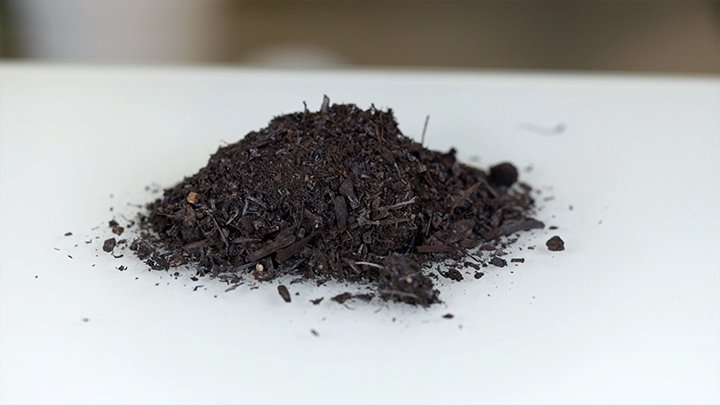
Even in these cases and on turf, mycorrhiza-based products are excellent
If we want to give a boost to the crops in spring it is rather useless to go organic as it would not provide the useful components in time, better in this case the use of much quicker mineral fertilizers.
Here is a table that will help you understand the pros and cons of both fertilizers:
| Mineral fertilizers | Organic fertilizers | |
| Ready effect | Yes | NO |
| Gradual transfer | NO | Yes |
| Excess problems | Yes | NO |
| Impact on fertility and mechanics | Bass | alto |
| Practicality | high | limited |
| Smells | odorless | often smelly |