
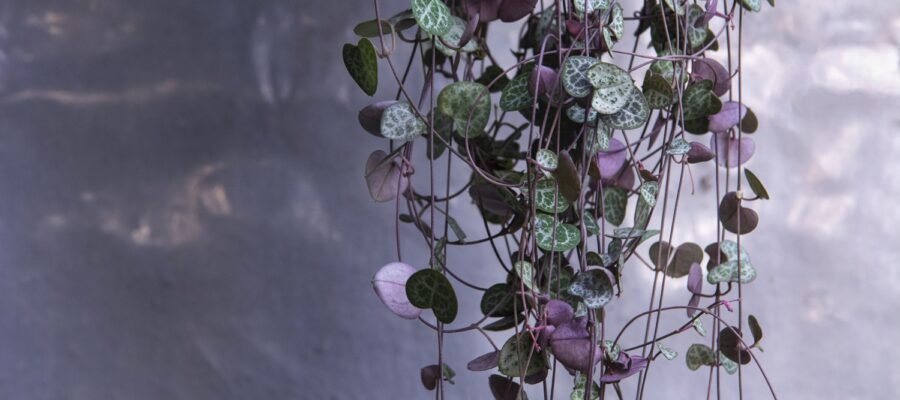
THE Ceropegia existed it is a hanging succulent plant much appreciated for its heart-shaped leaves and its rapid growth. Native to southern Africa, this plant is perfect for decorating shelves, bookcases or hanging in hanging pots, just like the Pilea with its round leaves and the Marimoa curious spherical algae perfect for aquariums.
If you are looking for a hardy and scenic houseplant, Ceropegia woodii is a great choice! Let’s discover together all its characteristics and how to take care of it.
Why Choose Ceropegia woodii?
- Easy to care for and suitable for beginners;
- it grows quickly and adapts well to indoor environments;
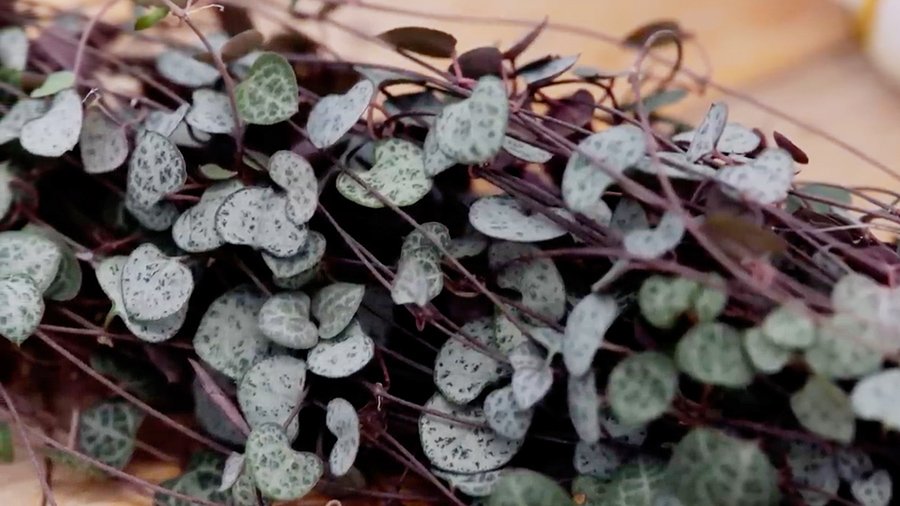
- decorative dark green leaves with silvery shades;
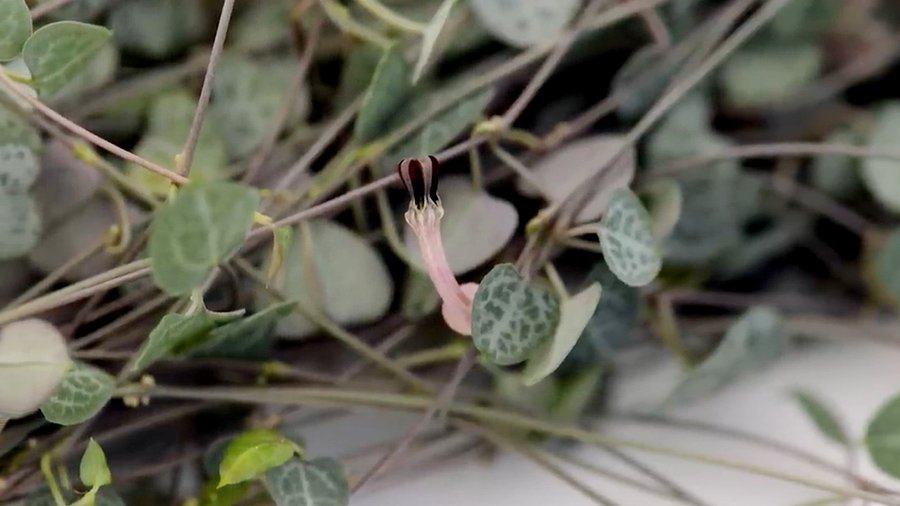
- small and tubular flowers, with a particular appearance.
Care of Ceropegia woodii: light, water and soil
Ceropegia exists easy to grow and requires little attention. Here are some useful tips:
Exposure and light
THE Ceropegia existed prefers a bright position, with intense indirect light. It also tolerates a few hours of direct light in the morning or at sunset, but it is better to avoid too strong sun which could burn the leaves. If you only have areas with low light, don’t worry, Ceropegia woodii will adapt to them; the only change you may find will be the color of the leaves, which will turn towards a paler green than usual and become more purple in the lower blade.
Watering
Ceropegia existed it should be watered sparingly, particularly during the colder months. To find out if the plant needs water just check the soil, if it is dry then it is time to give it a drink.
Soil and repotting
He prefers a potting soil for houseplants (I recommend, as always, One plus), better if mixed with cactus soil or with sand to improve drainage.
Temperature
Being a plant native to Africa, it is easy to imagine that the cold is not really “its home”:
- It cannot tolerate temperatures below 16°C.
- In summer it can be moved outside, as long as it is shaded location.
Fertilization
It’s useful use a houseplant fertilizer (the ideal is a liquid fertilizer for green plants), always following the label instructions, during the growing season (spring-summer).
Reduce fertilization in winter.
Propagation of Ceropegia woodii
This plant propagates easily in two ways:
- Tuberous growths: just detach them and bury them to obtain new seedlings.
- Cuttings: cut a branch of approx 8-10 cm under a node and plant it in a slightly moist substrate.
Origin and characteristics of Ceropegia woodii
THE Ceropegia existed belongs to the family of Asclepiadaceae and grows spontaneously in different parts of the world, including Canary Islands, Africa, Madagascar, Asia and Australia. It was discovered in 1881 by the botanist John Medley Woodcurator at Durban Botanic Gardens (a botanical garden located in KwaZulu-Natal in South Africa), who subsequently introduced it into European botanical gardens.
This plant is appreciated for its decorative appearance and its ease of cultivation. It has thin, drooping stems that can reach a length of 60-90cm (the height usually does not exceed 10cm), with intense green leaves characterized by silver variegations on the top page and burgundy shades on the bottom.
Flowering and tuberous growths
In addition to its splendid leaves, the Ceropegia existed produce:
- Tuberous growthssimilar to small beads, which act as natural seeds when they fall to the ground;
- Purple flowerswhich bloom in the summer months and add a further decorative touch to the plant.
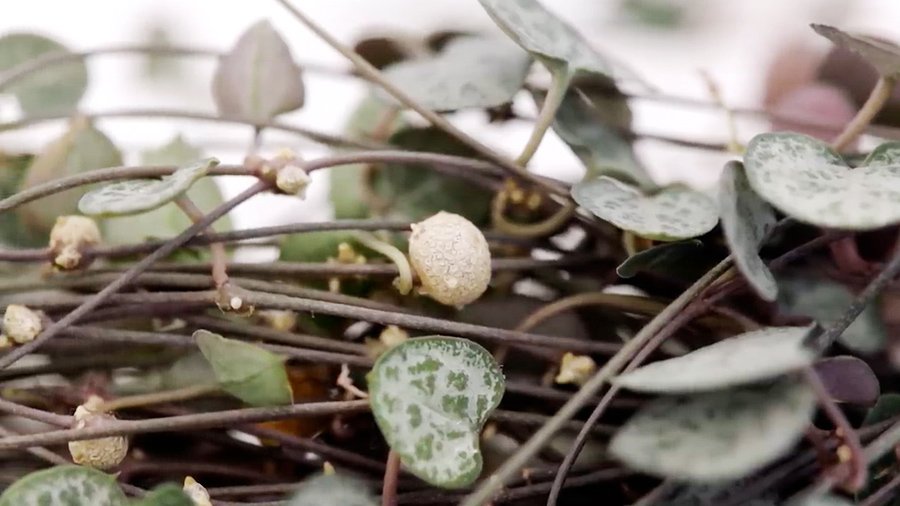
The branches may seem rather slender, so it may be an idea to take the longest ones and, having identified an outgrowth, bury it (without detaching it from the plant), in this way a fuller effect is obtained.
Common names of Ceropegia
Thanks to its romantic shape, Ceropegia has earned evocative names such as:
- String of hearts
- Chain of hearts
- Rosary of hearts
How to save a damaged Ceropegia: my experiment with sphagnum moss
Hanging plants, like the Ceropegiathey are beautiful but delicate: a small accident can break the shoots and compromise their growth, so I want to share with you a method that I have successfully tested to save a damaged Ceropegia and allow it to regenerate.
The problem: broken shoots
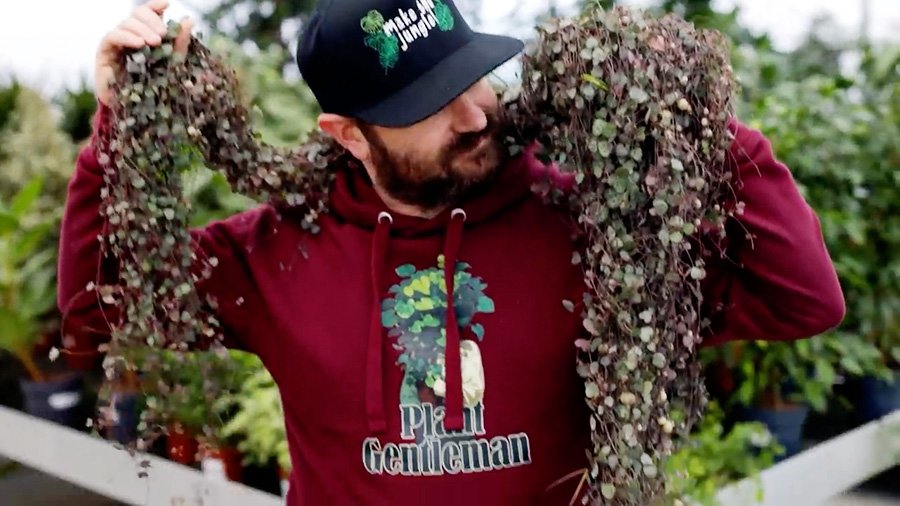
My Ceropegia was thriving in a hanging pot, hooked to the eaves of my porch. After years of care, it had reached an incredible length, touching the ground and climbing up support poles. However, a clumsy accident during watering caused the pot to fall, causing numerous shoots to break.
The damage was not superficial: the shoots of Ceropegia form a complex tangleand the breakage of just one point can compromise entire portions of the plant. Separating the dead branches from the still viable ones would have been a complicated and risky undertaking.
The solution: propagation with moist sphagnum moss
To avoid losing the plant, I decided to try one offshoot on sphagnum mossa rooting method that uses moisture to stimulate the growth of new roots. Here’s how I did it:
- Preparation of the substrate: I took an unused planter and created a bed of Chilean professional sphagnum mosswell moistened and wrung out.
- Positioning of the shoots: I placed the broken stems on the sphagnum bed, taking care to keep them well stretched.
- Coverage: I delicately covered with another layer of moist sphagnum moss, creating an environment conducive to rooting.
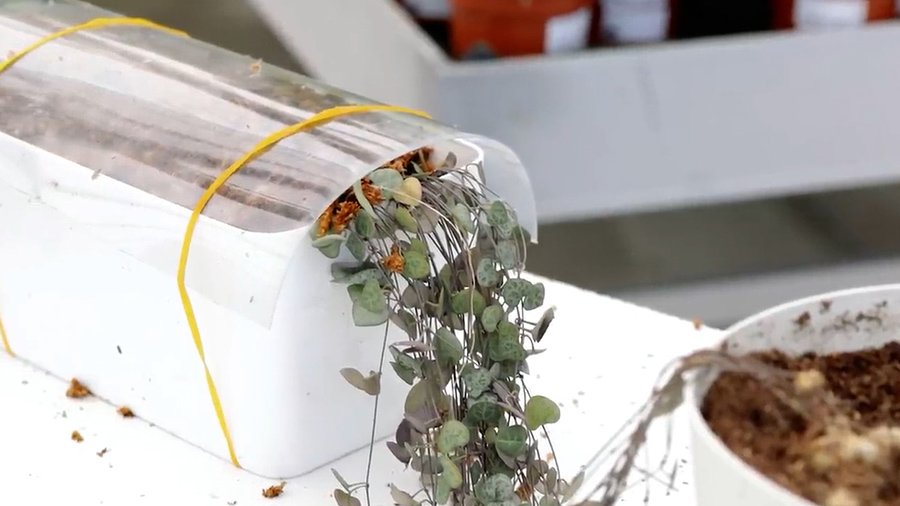
- Humidity control: to prevent the sphagnum moss from drying out too quickly, I applied a transparent plastic dome, securing it with elastic bands.
The results
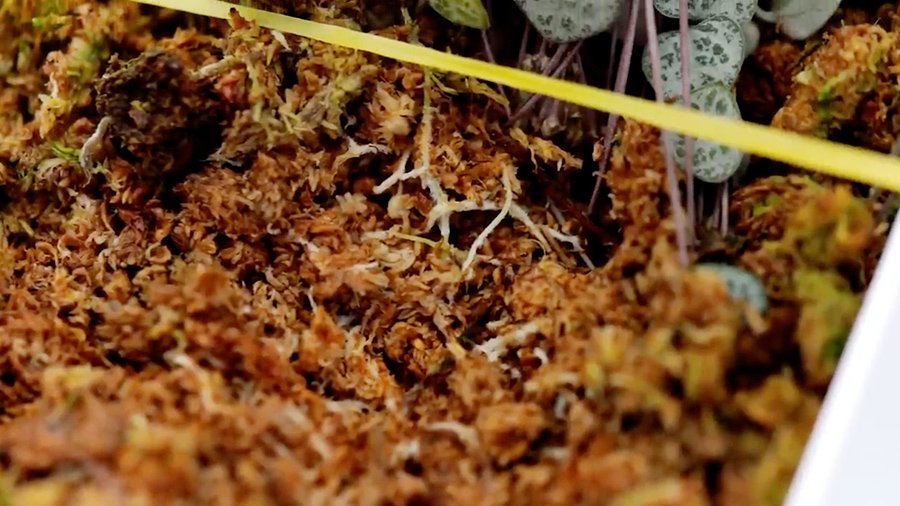
After a few weeks, the stems of the Ceropegia began to develop white roots in the sphagnum moss, a sign that the method had worked. The roots spread evenly, allowing the plant to remain viable despite detachment from the mother base.
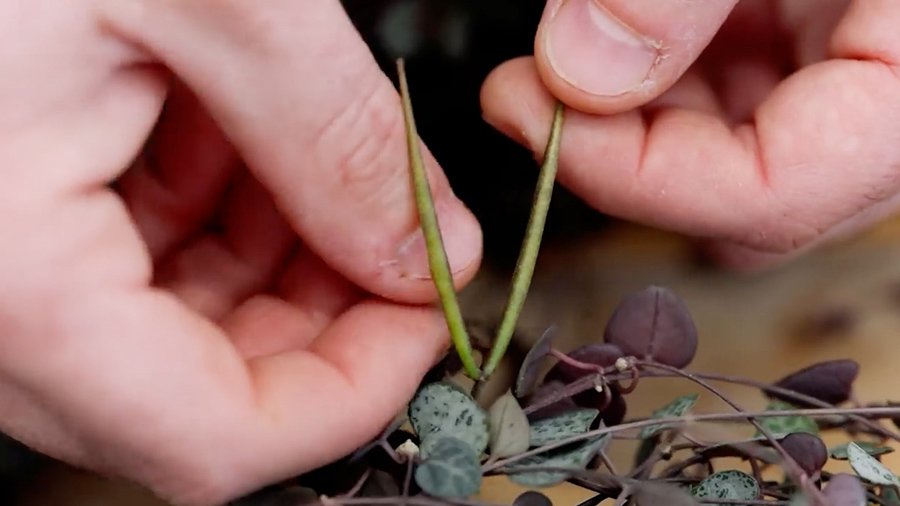
Also, during the process I noticed the formation of aerial tubers along the shoots, a sign that the plant was reacting positively. I also observed the presence of Ceropegia fruits, the classics pods typical of the Apocinacee, the botanical family to which it belongs.
Next steps
I will wait for the temperatures to rise, around April-May, before definitively separating the new rooted specimens. At that point I will be able to repot them, ensuring the survival of my beloved Ceropegia.
This experiment proves that it is possible save and propagate a plant even after significant damage. If you have hanging plants that have suffered breakage, try the technique too moist sphagnum moss!
The Ceropegia of the Nurseries the Georgics
The information given, except that purely describing the appearance of the individual species, is applicable to all other plants belonging to the Ceropegia genus.
- Ceropegia existed
- Heart-shaped leaves;
- upper plate of opaque dark green color with white veins;
- lower plate with burgundy shades;
- purple branches
- Ceropegia sandersonii
- fleshy branches;
- large green flowers.