
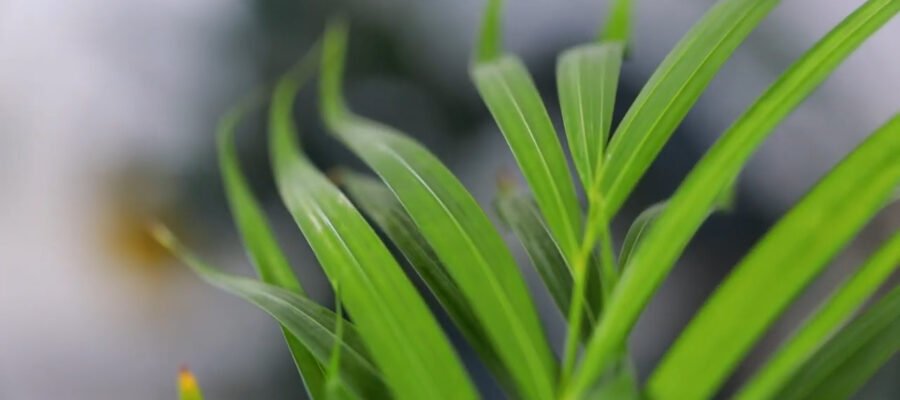
The areca palm (Dypsis lutescens) is a highly ornamental plant. Its lanceolate, bright green leaves bear a striking resemblance to the majestic Kentish tree.
Its impressive appearance earned it the Royal Horticultural Society’s Award of Excellence for Gardens—a rather rare award for a plant primarily kept as a houseplant.
While best suited for indoor cultivation, it also makes a wonderful addition to any garden if you live in a southern climate where temperatures don’t drop below 10°C (50°F). 😉
Areca palm care
The Areca palm prefers one abundant and diffused light. It tolerates direct light but only in cold seasons. Likewise, it is better to avoid areas that are too dark.
What temperature does the Areca palm want
The ideal temperature range for the Areca palm is from 18 to 25°C, but it can withstand temperatures up to 12-15°C.
The Areca should be placed away from cold windows, air conditioners and heat sources.
How to water the Areca palm
Like many palms, Arecas also love the moderately moist soilbut they are sensitive to excess water. It is therefore recommended to wait until the first centimeters of substrate have dried before proceeding with the next watering.
it is very sensitive to fluoride accumulations.
Which substrate to choose for the Areca palm
It is important to choose a draining substrate, as the Areca is rather intransigent when it comes to water stagnation which would rather easily lead it to develop root rot.
The ideal fertilization of the Areca palm
Fertilize with a liquid or granular fertilizer for green plants; in winter it is possible to consider halving the doses.
Propagation of the Areca palm
The Areca palm can be propagated by division of the tuftsmuch more effective method than growing from seed.
The division can be carried out throughout the year but it is recommended to do it in spring where the plant is more vigorous.
Repotting the Areca Palm
Palm trees in general, and therefore also Areca, do not like their roots to be disturbed often, so many repottings could cause damage to the plant, stopping its growth. Essendo piante che non crescono molto velocemente they don’t even need frequent repotting (about once every 2 years), they will not be affected by the roots being a little narrow in the pot 😉
Pests and diseases of the Areca palm
- Air conditioning;
- excessive watering;
- unsuitable soil;
- compressed roots
In this situation you can proceed with replacing the soil to check the state of the roots, or move the pot to a spot with less light and more humidity.
Gray mold, on the other hand, develops following heavy rain and as a symptom it has gray mold forming small protuberances on the surface of the leaves.
Powdery mildew forms tiny white spots on leaves.
Common Areca Palm Problems
Falling leaves
The reasons why Areca leaves could fall are:
- Excess water: in this case it is advisable to check the soil carefully before proceeding with the next wetting and carry it out only if the soil is not already damp. In questo caso le foglie tenderanno ad ingiallire;
Brown pointed leaves
Yellowing leaf tips may be a sign that the plant is not absorbing enough water and nutrients from the soil. This problem can be solved, but if left untreated, the leaves will eventually turn completely yellow, and the plant will die.
Another cause could be over-fertilization, as excess nitrogen, phosphorus, and other nutrients can accumulate over time, leading to yellowing leaf tips.
The water quality used when growing areca palms is crucial. It is generally recommended to avoid using tap water, as the chlorine and fluoride levels can vary by region and these substances can harm the plants.
You can choose to use rainwater or distilled water. Alternatively, you can fill a bucket with tap water and let it sit for about 24 hours. After that, the water quality will usually be safer.
Faded leaf color
This problem is probably due to the lack of light.
Discoloration at the base of the plant
Yellowish discoloration around the base of the plant is usually a symptom of over-fertilizing, as we have also seen in the case of brown leaf tips.
It is a rather serious manifestation because it indicates the presence of root rot induced by the absence of oxygen, removed by too many nutrients. To prevent this from occurring, you can water abundantly from time to time, until excess water begins to flow out of the drainage holes for a few minutes.
Description
Areca is a palm tree evergreen cIt grows slowly to moderately and reaches a maximum of 8m (very difficult to reach in apartments).
It has many names: Areca lutescens, Chrysalidocarpus lutescens, Dypsis lutescens, Butterfly palm (because the fronds look like butterflies), Yellow palm, Golden Cane (because the lower canes have a gold/yellow color) and of course Areca palm.
Taxonomic description
Habitat
The Areca palm is native to Madagascar.
The Areca palm is pet friendly
Excellent news for our 4-legged friends: theAreca is not poisonous!
Curiosity
The Areca palm is listed as a “near threatened species” on the International Union for Conservation of Nature’s Red List.