
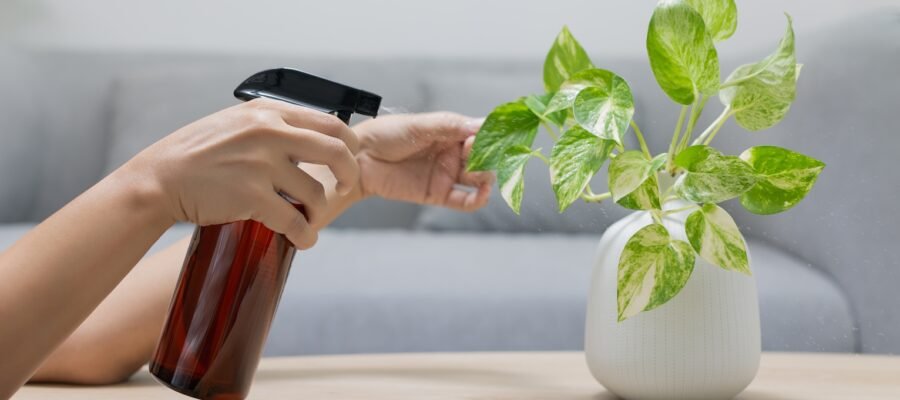
Pothos – Care Guide: It’s a versatile and extremely easy-to-care-for plant. Why? Because it won’t mind if you occasionally forget to water it. It won’t complain if you don’t prune it. It won’t feel neglected even if you place it in an inconspicuous spot in your home. In short: caring for it requires almost no effort.
If you’re a plant novice, or simply looking for a special, easy-to-care-for, and aesthetically pleasing plant, then pothos is the perfect choice! Ready to learn more about this resilient little plant?
The Pothos
As you may have understood by now, the Pothos is a very simple plantperhaps the simplest of all, this is because it resists even long periods of lack of attention without too many problems.
This plant is commonly called “Pothos”, but despite this its botanical name is Epipremnus. But it doesn’t end there! In fact it hides a less friendly nickname, such as “Devil’s Ivy”, this is because it is almost impossible to kill, even if it is kept in the dark it will survive, in short, like a true creature of darkness.
Pothos is a genus composed of approximately 30 species of evergreens. It is native to the tropical forests of Asia, northern Australia and the Pacific Islands.
It is part of the Araceae family. It has medium or moderate growth, less if the plant is in low light conditions.
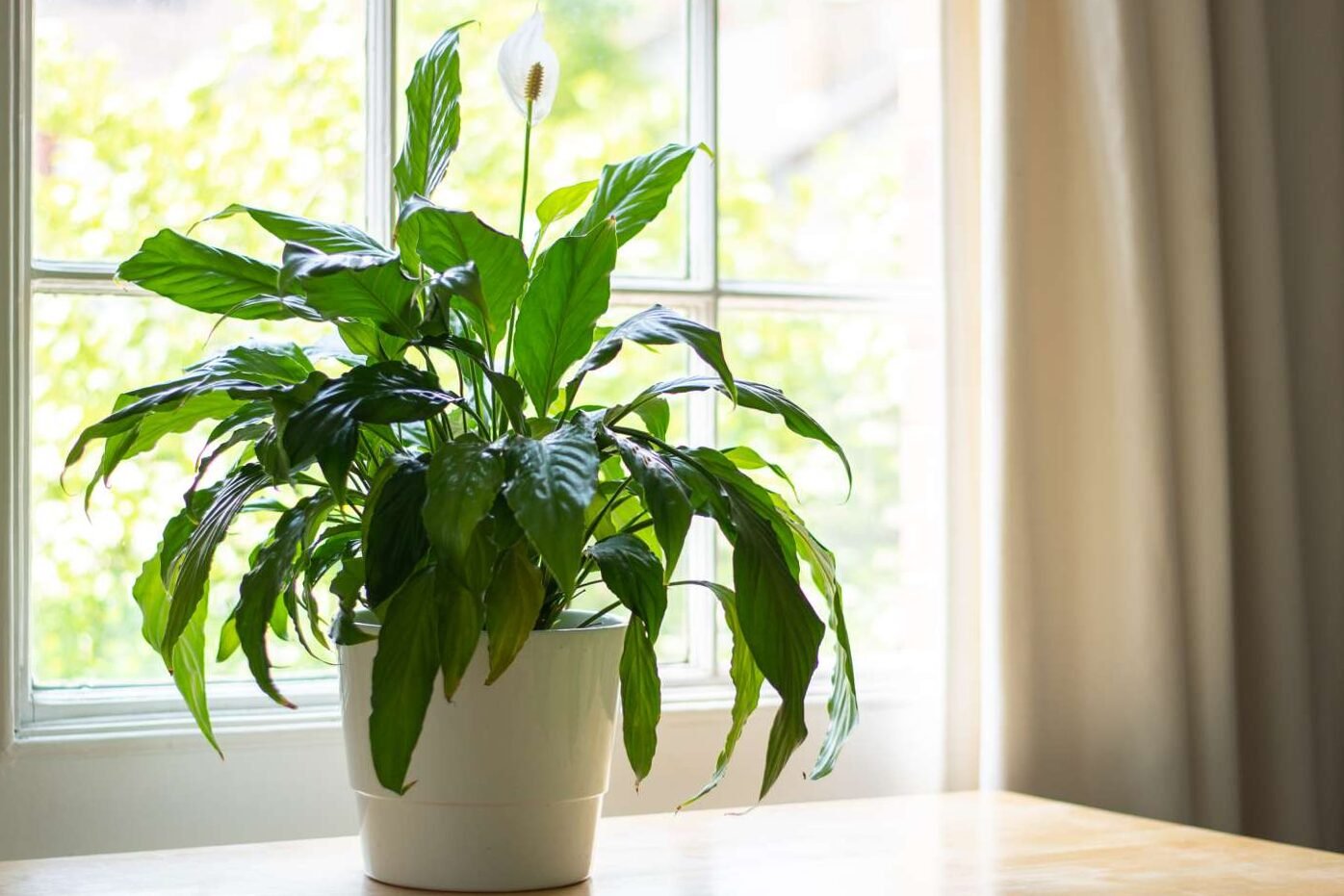
Pothos are much appreciated for the color of their leavesin fact the colors can go from light green to an intense dark green and it is not just the color that changes, but also the shape of the leaves themselves is changeable, starting from the elliptical, to the lobed and so on.
The size of the leaves is normally between 10 and 20 cm.
These plants they are also capable of generating yellow or white flowers but unfortunately they are very rare, almost impossible to see in house plants.
Pothos is one of the plants that became known for being part of NASA’s study on plants that purify the air, but is it true? Here is the right article to find out!
Caring for Pothos
By now we have understood that the Epipremnum is good-natured, but let’s not make his life difficult, let’s find out what we can do to raise him as best as possible!
How much light does Pothos need?
It fits well in bright areas with shielded light. It also tolerates lower brightness conditions but the vivid color of the leaves and the speed of growth could be affected.
You should also be careful not to leave the Pothos exposed to direct sunlight, particularly during the hot months, where they may suffer burns.
How do you water Pothos?
Pothos doesn’t have too many rules when it comes to water, but it loves to have the soil dry before the next watering is done, so if the soil is dry it’s also the right time to water.
Must pay close attention to water stagnationsnot at all appreciated by the plant.
Which substrate to use for Pothos?
When it comes to soil he is unpretentious, give him one that promotes water drainage and he will be happy. We recommend our super soils from the One line!
Ideal temperatures of Scindapsus
The ideal temperature must be above 15°Ceven better if it is in the range between 18 and 28°C.
What fertilizer to use for Pothos?
It is highly recommended, during the growth period, to administer a liquid fertilizer for green plants once a month combined with the irrigation water. Alternatively, a granular fertilizer can also be used.
Drink Scindapsus
Pruning for Pothos is not an obligatory step, but can be done for give a shape to the plant that perhaps has a tendency to grow without much order, or to shorten branches that are too long.
How to Propagate Pothos
Very simple for cutting, do you want to know how to do it step by step? Here is the perfect article 😉
Possible Pothos problems
- Older leaves turn yellow and wither with dry edges
In these cases the fault could be the lack of water. - Faded leaves
In this case it is advisable to move the plant to a more illuminated area. - The leaves fall
As in the first case, the solution could be to give her a greater quantity of water.
Plants not very bushy towards the end of winter
Towards the end of winter, but in reality almost always during the year, it can happen that the plants take on a rather sparse appearance. It is a problem that can happen not only with Pothos, but also with Ceropegia, Amydrium and any other plant with a climbing or trailing appearance. The solution is to take portions of plant material from the stems that have become a little plucked, use it to make cuttings and, finally, place these cuttings on the top of the plant.
Here’s how to do it step by step:
- clean the plant by removing all the dry or no longer healthy leaves;
- identify the last parts in which the plant is doing well and still has leaves;
- from the chosen points, cut parts that still have leaves (although the presence of leaves is not mandatory), thus creating cuttings (be careful to include the nodes);
- understand if the plant has problems related to the roots (e.g. overpotting);
- it is not mandatory, but I recommend using a rooting product to help the cuttings;
- insert the cutting into the ground making the knot adhere to the surface of the substrate;
- water if necessary, preferably by sub-irrigation.
Pothos is not a pet-friendly plant
This is a poisonous plant, so extreme caution is necessary, and it should be kept away from children and animals. It is especially dangerous for cat owners because it contains calcium oxalate. If a cat ingests it, it can irritate mucous membranes and cause gastrointestinal problems.