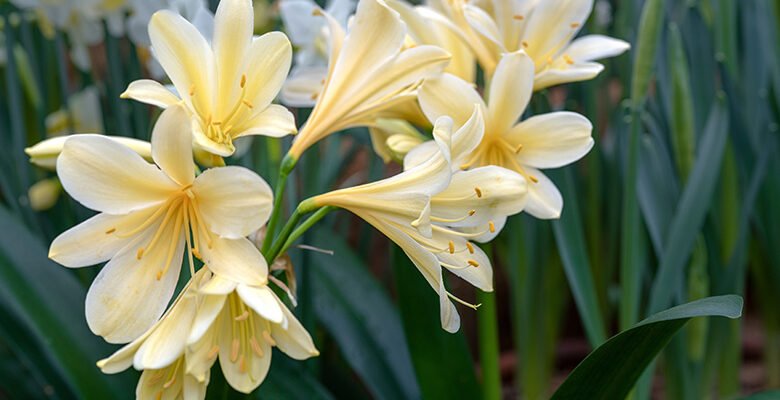
Clivia, fascinating and resistant indoor plants, are famous for their beauty due to magnificent and showy colorful flowers that bloom during spring and summer. Native to South Africa, these plants belong to the Amaryllidaceae family. Clivias offer a unique opportunity to add a touch of elegance and color to interior spaces 😉
Clivia care and cultivation
Clivia is a very easy-to-care-for potted plant that produces abundant and vibrant flower spikes in spring and summer, making it a delightful sight. Native to the forests of South Africa, it thrives in indirect light, a warm environment, regular watering, and cool, dry winters, all of which promote flowering. A typical Clivia plant grows to about 45 cm tall and 30 cm wide.
One of Clivia’s advantages is its tolerance for low light indoor environments. It is also well-suited for outdoor decoration. Starting around April, when the frost has subsided and nighttime temperatures stabilize above 5-8 degrees Celsius, Clivia can be moved outdoors. At this time, choosing a slightly shaded location is important, and direct sunlight should be avoided, especially during the height of summer.
How to make Clivia bloom again
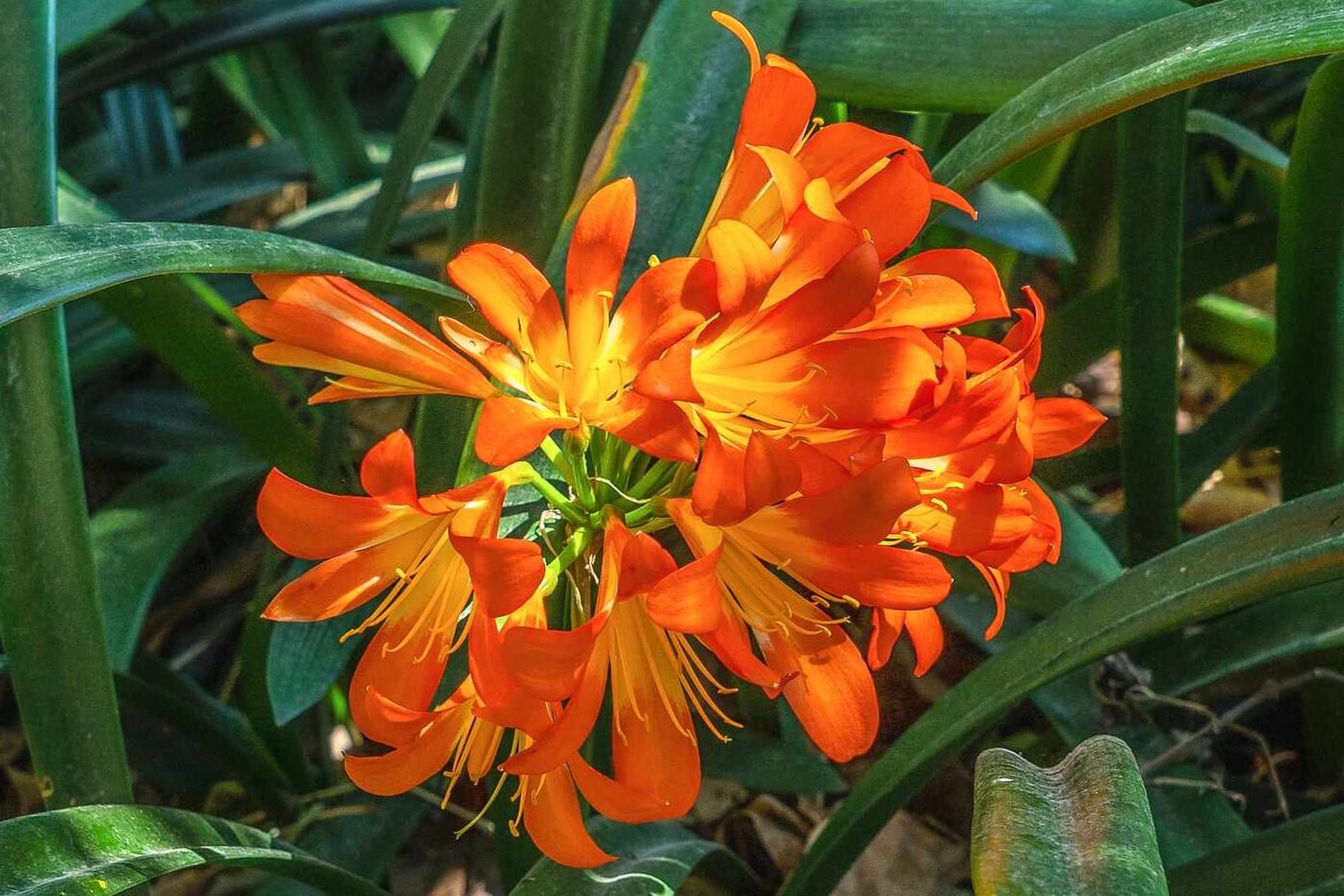
The Clivia is often accompanied by the frustration of not being able to make it bloom again, but don’t worry, by taking some aspects into consideration, you will understand how to make the flowers of your Clivia return year after year.
1. Frequent repotting and pots that are too large
Clivia is one of those plants that loves to be cornered and therefore repotting should be done very rarely, approximately every 3-5 years. To understand when the right time is, check the state of the roots in spring and if they are really very crowded, then it is the right time. At this point you choose a vase that is slightly larger than the original vasethis aspect is very important! Do you want to know why? Here is the right article for you.
To prevent the soil from becoming depleted due to very limited repotting, I advise you, once a year at the beginning of spring, to:
- remove the first centimeters of soil with your hands and replace it with fresh soil, which must be draining, light and of excellent quality (I recommend One plus);
- use a material such as leonardite to insert before placing the new centimeters of soil or mixing it with it.
2. Lack of a rest period
So that it can flourish again, it is essential to guarantee the Clivia a period of restthus mimicking the South African winter a bit from November until February (more or less for 2/4 months) the Clivia needs to rest at temperatures ranging from 5 to 10°C. The place must be bright, watering during this rest period must be done with sparingly but without ever allowing the substrate to dry completely (a good rule of thumb would be to feel the degree of humidity by inserting your finger into the soil and, if necessary, water by sub-irrigation).
After the rest period (around February/March) the plant will begin to create the first buds.
3. Adequate fertilization
Another very important thing to stimulate growth and flowering is to give Clivia the right weekly fertilization, especially from spring until late autumn. We can use a specific product for flowering plants. My favorite fertilizers are:
To have even better blooms I also recommend using a biostimulant, in particular I recommend Bio Oro.
How to water the Clivia?
As far as wetting is concerned we must try to support the stages that we adapt to the rhythm of the plantTherefore:
- water sparingly during the resting phase;
- in February/March, when spring returns, move the plant to a warmer and brighter solution and gradually resume with increasingly abundant watering;
- in summer, especially if kept outside, water the Clivia almost daily.
It is important to always take care not to over-water Clivias, as the roots can rot in soggy soil, especially during the winter. A drier period in winter, as I said before, helps to start flowering.
How much light does Clivia want?
The Clivia loves intense, filtered or indirect light. Avoid direct sun in summer because it can burn the leaves (in winter there is no problem, on the contrary).
The Clivia is sensitive to radiators and other heat sources and must also be kept away from cold air currents.
During the winter it is better to move the Clivia to a cooler or unheated area, at around 10°C (excellent places such as verandas and stairwells), this will allow it to rest.
The Clivia can tolerate temperatures up to 5°C but it is essential to do an adequate harden-off period before moving it from “home” temperatures to more external ones. Likewise, when it needs to be brought back inside, it must be done gradually.
Pruning the Clivia
There is certainly not much to say about pruning encourages new blooms what the English call deadheadingi.e. the cut of the withered. Once all the flowers in the cluster have faded, simply remove the entire stem at the base. It’s best to wear gloves because the sap can irritate your skin.
A tip is also to keep the Clivia plants clean of yellowed leaves, cutting them close to the center with sharp scissors.
Propagation of Clivia
There are 2 ways to propagate Clivia:
- For seed
the seed must be harvested once the flowering produces a fruit which then dries out. When Clivias are grown indoors, their flowers are usually not pollinated and although the plants can form fruit, the seeds inside will not be viable. To remedy this, you will need to take a small brush, pass it over the anthers (thus collecting the pollen) and then pass it over the pistils. Or move the flowering plants outside to a warm, shaded location to be pollinated naturally.
The flowers, once pollinated, will form berries containing large seeds. When the fruits are ripe, remove the seeds and plant them immediately. The new seedlings should emerge within 6/8 weeks. Water regularly and maintain the temperature at 16°C.
New plants should flower after three to four years: the colors of the flowers may vary from the mother plants. - For division
every now and then, when mature, you will notice that the Clivia naturally produces small plants next to the mother plant. These can be detached and repotted separately in spring and summer, as we did in the Phalange video.
The new plant should be kept at around 16°C, in an area of intense, indirect light, watering it well and misting the foliage until the new Clivia is well rooted and producing leaves. The new plants should flower after a couple of years.
Clivia parasites
Clivia plants can be subject to attacks by cochinealto counteract it we can use our usual mix of trusted natural products dissolved in a liter of water:
To find out more about how to treat cochineal I invite you to read this article!
Common Clivia problems
Clivias are generally hardy and problem-free when grown in the correct conditions. However, some problems may arise.
Clivia does not flower
This problem is usually caused by 5 possible factors:
- excessive decanting;
- too frequent repotting;
- too hot in winter;
- insufficient water during the growth phase (in this case the tips of the leaves usually turn brown);
- the plants are too young (it takes several years for them to flower).
Clivia flowers hide among the leaves due to their short stems
Short stems in Clivia can be caused by excessive heat during the winter, it is important to keep temperatures around 10°C from November to February.
Clivia leaves turn yellow
Leaf yellowing can be caused by a lack of nutrients, excessive wetting or water stagnation.
To revive a plant after a period of stagnation, it is necessary to carefully remove it from the pot, eliminate the damaged roots, replace the wet soil with fresh substrate and adjust the irrigation to keep the soil slightly moist, avoiding water stagnation. During the winter, it is advisable to reduce the frequency of watering to promote optimal adaptation to seasonal conditions.
Brown spots on Clivia leaves
Clivia usually show brown spots on the leaves when they have been burned by direct sun, in fact it is normally a problem that occurs in summer, when the light is refracted through a window or through drops of water on the leaves.
Ultimas Entradas Publicadas
4 reasons to adopt Philodendron brandtianum, the perfect houseplant!
Various models and big discounts in the summer sales: the deal of the day

Let’s talk about Christmas decorations

– Complete calendar of holidays and events

Our favorite seasonal rugs and design tips

The most inspiring Christmas gift perfumes 2025: ideas for him and her
Camellia sasanqua, winter flower – Online Plant Sales
What is happening to our Planet?
How to build a greenhouse for succulents: practical guide