
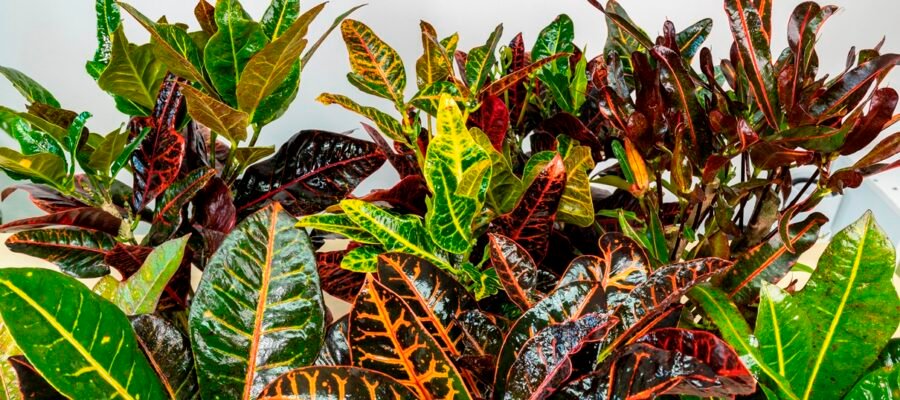
With its vibrant colors and rich fragrance, you must belong to the Euphorbiaceae family! Our friend, the Croton, has heard this countless times; after all, it belongs to such a well-known family, so it’s not difficult to identify. Hopefully, it won’t be confused with those plants whose names might make you want to avoid them.
In short, the Croton is hard to ignore. Its bright colors are eye-catching, as if it’s shouting, “Come see me!” And we assure you: it’s much easier to care for than its famous relative—the poinsettia. In short: definitely worth a look!
Crotone
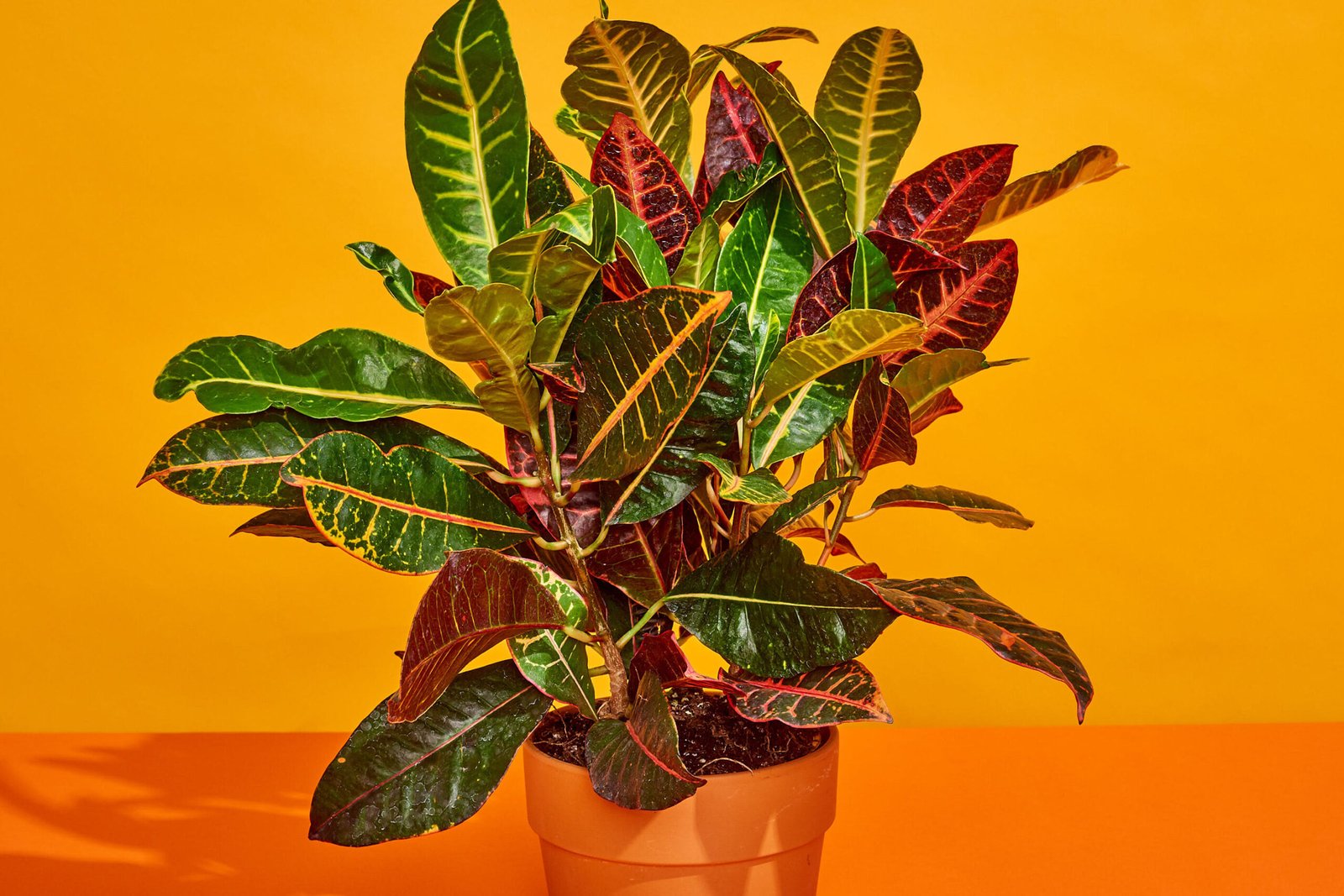
Although we know it as Croton (which is actually a different genus belonging to the same family: Euphorbiaceae, which makes it a magnificent cousin of the very famous Poinsettia!) its correct botanical name is Codiaeum.
It is a genus to which 15 species of evergreen shrubs belong, of which only one is cultivated for ornamental purposes, namely the Codiaeum variegatum ‘Pictum’. All the cultivars that we find on the market derive from it.
The name, of uncertain origin, seems to derive from the vernacular name Molucco Kodi’sused by Malays and Indonesians.
Croton is native to the tropical forests of south-east Asia (Malaysia, Indonesia, southern India, Ceylon) and Oceania.
In nature they grow as large evergreen shrubs that can reach 3 meters. Naturally, at home and in the garden they will remain much smaller, typically reaching heights of around one metre.
The leaves are simple, alternate, glabrous and leathery. The different cultivars offer rather variable shapes and variegations of the leaves but in general the young leaves have shades of green with white and yellow streaks and which, over time, turn to shades of red, orange and deep pink, black.
The flowers are small and insignificant, borne on long spike inflorescences, with little ornamental value (but a possible means of propagation even if it is rare to see them flowering indoors).
Caring for Croton
Codiaeum is not a very demanding plant but be careful, it seems to attract dust, for this reason it is recommended to use a cloth moistened with water to remove any deposits that could damage the plant
Light
Loves sunny placesin fact, growing it in shady areas will cause it to lose leaf color, especially leaves in shades of red require a lot of light.
Waterfall
Croton needs soil kept moist, but not soaked, it is one of the few plants that always likes to have a little moisture in the soil. In winter the wetting frequency will probably decrease.
Before proceeding with the following wetting it is better to wait until the soil is dry for the first few cm, in this case it is better to proceed with a vaporizer, in order to slightly moisten the more superficial parts which tend to dry first.
Land
It is important to choose well-draining soil, you can choose one ready for use like our Florenpot for the most demanding green thumbs the more complete One or One plus.
If you usually use homemade mixtures, a good recipe for this plant includes 50% peat and 50% mature leaf earth, to which sand should be added for further lightening.
Temperature
When night temperatures start to drop below 10°C it should absolutely be brought indoors, in general it is better not to expose it to temperatures below 16-18°C.
In regions of Italy that can boast milder winters, Croton can be grown as an outdoor plant, giving your garden a truly pleasant touch of colour. Otherwise he will easily adapt to home life in an apartment.
Fertilization
Once a month it is recommended to administer liquid or granular fertilizer for green plants, following the doses on the label.
I repot
The Croton does not like to be repotted and could easily go into shock with consequent loss of leaves, so it is better to move it as little as possible, in any case if it were necessary it is best to continue to take care of it as best as possible and it will recover without too many problems.
Propagation
It is possible to propagate Croton from apical cutting or even from leaf cutting. On larger and defoliated specimens it is possible to use air layering on mature wood.
At a professional level, seed propagation is carried out only for the selection of new varieties.
Problems
Crotons are resistant plants and are unlikely to be victims of parasitic attacks, however sometimes some infestation by scale insects and mites may occur.
Toxicity
Attention, this plant is entirely poisonousespecially the seeds, furthermore if damaged it produces a milky sap with an irritating effect on the skin, therefore it is necessary to pay close attention if pets or small children are present.
Ultimas Entradas Publicadas
4 reasons to adopt Philodendron brandtianum, the perfect houseplant!

Various models and big discounts in the summer sales: the deal of the day

Let’s talk about Christmas decorations

– Complete calendar of holidays and events

Our favorite seasonal rugs and design tips

The most inspiring Christmas gift perfumes 2025: ideas for him and her
Camellia sasanqua, winter flower – Online Plant Sales

What is happening to our Planet?

How to build a greenhouse for succulents: practical guide