
This week I’m going to tell you a peculiar story about one of our customers: A few weeks ago, Patrizia was tidying up the vases on her terrace when she accidentally knocked over a wrought iron planter with her beloved plant on it.
“That wasn’t just any vase; that was my beloved aloe vera, I’d watched it grow for twelve years!”
Patrizia told me that her beloved aloe vera (Aloe arborescens) was completely damaged: the few remaining leaves were broken off, making it impossible to replant.
“The plant was just a stump… I almost cried!”
“I can imagine,” I replied. But her expression immediately changed.
“Do you know what I did with it?”
What did you do with it?
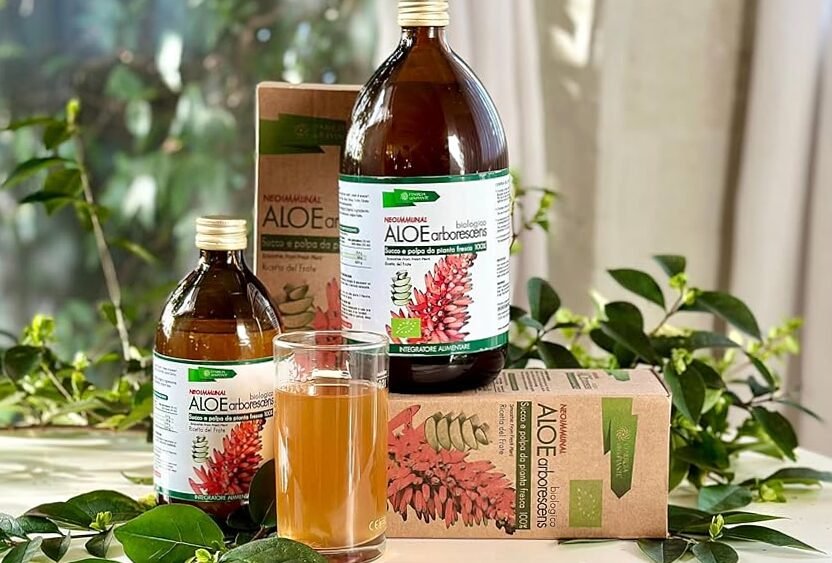
“Out of curiosity, I weighed the leaves: each leaf weighed nearly half a kilogram! It would have been such a waste to throw them away, so I made syrup from them—a recipe I found online!”
Therefore, thanks to Patrizia’s experience, I can now share Father Romano Zago’s recipe for this extraordinary aloe vera syrup!
- Aloe Vera Syrup—Father Romano Zago’s Recipe
- Ingredients
- 500g honey
- 45g (about 6 tablespoons) spirits (grapa or cognac)
- 350g aloe vera (mature leaves, at least 5 years old)
- Instructions
Wipe the aloe vera leaves with a damp cloth; remove thorns and impurities with the tip of a knife. Chop the leaves into small pieces and place them in a blender with the honey and spirits.
Blend thoroughly until the mixture is liquid and ready to drink. Pour the mixture into an airtight container.
Must be refrigerated between 4 and 7 degrees Celsius (39 to 45 degrees Fahrenheit).
Important Notes
Father Zago recommends using aloe vera leaf peel in his recipes. However, the U.S. Food and Drug Administration (FDA) does not recommend this because the peel contains aloin, which is very dangerous at concentrations exceeding 50 ppm (1/2 ounce). Click here for more information.
Aloe vera leaves should be picked after sunset or before sunrise, never after rain.
Aloe vera is sensitive to light: to prevent oxidation and loss of active ingredients, it is important to prepare mixtures in darkness whenever possible.
Dosage
Father Romano Zago recommends taking 1 tablespoon at least 20-30 minutes before meals (breakfast, lunch, and dinner), but the container must be shaken vigorously before use.
Click this link for more explanations and references on Father Zago’s writings.
Did you know?
The most well-known aloe vera variety is Aloe vera, but the best variety for making aloe vera syrup is Aloe arborescens. Its active ingredient content is three times higher than other aloe vera varieties (30% higher aloin content).
The main ones bio-active substances present in aloe are:
- Essential amino acids
- Mineral salts
- Anthraquinones (Allowed by Aloe-emodin), with antioxidant properties, anticancer And laxatives.
- Polysaccharides (Sugars and soluble fibres): they stimulate the immune system, turn off gastro-intestinal inflammatory processes, healing activity, antidiabetic And antioxidant.
Cultivation
From this week Aloe Arborescens and Aloe Barbadensis are also available in our online shop, here are some tips for their cultivation.
In the winter period (November-March) the plants must be kept sheltered, at a temperature not lower than 8°C. From April they can be positioned outside, in partial shade, never in direct sunlight.
THE potted plants they must be watered only when the soil is dry: the soil recommended is that mixed for cacti and succulentswhich allows good water drainage.
Conclusion
Patrizia’s story is a reminder that gardening is not only about technique, but also about attachment, patience, and resilience. For twelve years, her aloe vera was more than just a plant in a wrought iron planter — it was a living companion that had grown alongside her, season after season. When it fell and the leaves broke beyond recovery, the loss felt deeply personal. Anyone who has cared for a plant over many years understands that such moments can be surprisingly emotional.
Yet, even in accidents like this, there is an important lesson. Plants, including resilient species like aloe, teach us about cycles — growth, damage, and renewal. While the original specimen of Aloe arborescens may have been irreparably damaged, its story does not necessarily end there. Aloe plants are known for their ability to propagate from offsets and healthy cuttings. Often, what seems like a total loss can become an opportunity to start again, carrying forward a piece of the original plant into a new generation.
This experience also highlights the importance of stable placement and secure containers, especially on terraces or balconies where movement and limited space increase the risk of accidents. Choosing sturdy supports and positioning plants thoughtfully can help prevent similar situations in the future.
Most importantly, Patrizia’s experience reflects the deeper bond between people and plants. Gardening is an act of care over time, and that time builds meaning. When something is lost, we are reminded of how much dedication and patience were invested. But just as plants regenerate, so can gardeners. With renewed attention and hope, a new aloe can grow — perhaps even stronger — becoming the beginning of another twelve-year journey filled with care, growth, and quiet satisfaction.
Ultimas Entradas Publicadas
4 reasons to adopt Philodendron brandtianum, the perfect houseplant!
Various models and big discounts in the summer sales: the deal of the day

Let’s talk about Christmas decorations

– Complete calendar of holidays and events

Our favorite seasonal rugs and design tips
The most inspiring Christmas gift perfumes 2025: ideas for him and her
Camellia sasanqua, winter flower – Online Plant Sales
What is happening to our Planet?
How to build a greenhouse for succulents: practical guide