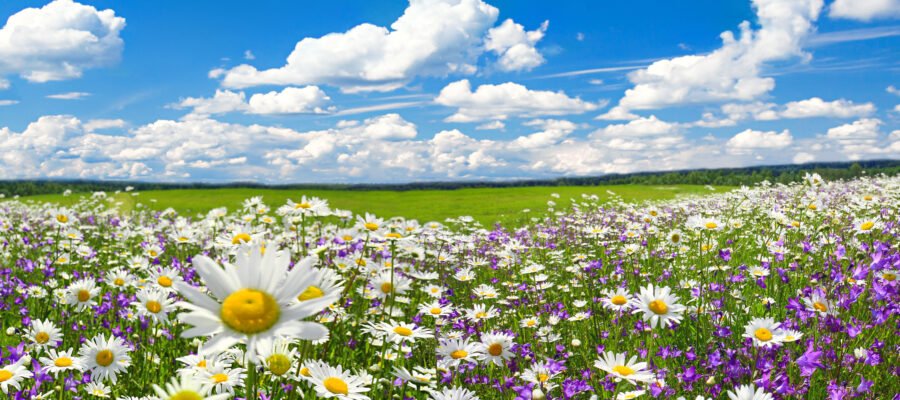
Summer flowers blooming colorfully and humming and humming to each other. But there’s more to it than sowing a bag of flower seeds. In order for you to enjoy your flower meadow for a long time, you should time it correctly and carefully prepare the soil.
Flowery meadow vs. flowered area
Every year, people create a true wildflower meadow, inspired by natural habitats. Here, various grasses, annuals, and perennials grow, providing year-round habitat and foraging grounds for insects and other small animals. If planted and maintained properly, such plant communities can remain stable for many years.
For those who simply want to temporarily transform an area into a sea of flowers, a wildflower strip is a good option. Wildflower strips only need to be planted once a year. For example, you can plant a wildflower strip in a flower bed to temporarily stop the soil from growing vegetables. Such a wildflower strip would be particularly spectacular at a wedding, but the flowers will fade quickly after blooming.
Therefore, before buying seeds, ask yourself: Do you prefer an annual wildflower strip, or a permanent wildflower meadow with rich biodiversity that can be enjoyed for many years?
The right seeds
Don’t be tempted to impulse buy when you see a flowering meadow or flowered area. Many cheap mixes usually contain annual summer flowers that are not suitable for creating a flower meadow. Seeds for a fun flowering area should also be chosen carefully. If you want to create the flowering area in a strip in your vegetable garden, it is best to avoid ingredients such as mustard, radish or other cruciferous vegetables. Typical annual flowers are tuft of grass, marigold, buckwheat, borage and sunflowers.
The seed mixture for a flowering meadow always contains a percentage of grass, 30 to 50% is recommended. You should mainly choose uncompetitive grass species, especially if you want to convert a former lawn into a flower meadow, it is possible that the grass will suppress the wildflowers. The flowers used are at best local or even regional. Avoid special breeds, they are less viable than their wild counterparts.
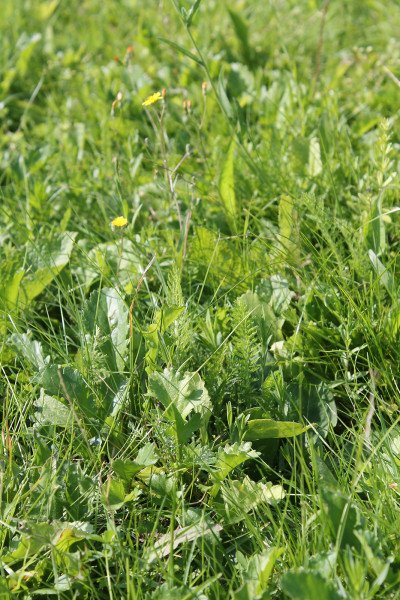
Create flowering areas
On a vegetable bed you can quickly and easily create a flowering area. The system has little success on the lawn. The grasses will prevail and suppress the flowers. If you still want to turn a patch of lawn into a temporary flowering area, you need to carefully remove the sod and loosen the soil.
The seeds are evenly distributed over the prepared soil, raked lightly and tamped. Now is the time to water regularly until the first flowers appear.
Creating a flower meadow: step by step
If you want to create an easy-care, species-rich flower meadow in your garden for many years to come, you need to make preparations. Otherwise the flowering meadow will become impoverished over time and show only a few flowers.
1. Slim down the lawn
A lawn requires intensive care; fertilization, irrigation, mowing and scarification are regularly scheduled. First of all, intensive care in the area should be suspended. It is better to start this preparation the previous year. Stop watering or fertilizing altogether. Mow less often and remove grass clippings. This reduces the nutrient content, an important prerequisite for the flowers to subsequently prevail over the grass.
2. Preparation of the land
First, the lawn area is scarified several times, then a large part of the lawn is removed. In the short term some grass will grow, but in the long term they will be replaced by flowering meadow plants. Alternatively you can completely remove the clod and till the soil. However, this approach is more suitable for a flowering area.
3. Sowing
Depending on the region and the seed mix, the ideal time for sowing is between March and June. Make sure the soil is warmed enough and there is enough moisture. Distribute the seeds evenly, rake them lightly and water the soil.
Practical tip: how to sow evenly!
Sowing a flowering meadow evenly is not so easy. With our practical advice you will be successful!
Practical tip 1 – The right amount
Usually the package indicates how many seeds are needed per square meter. Stick to this information, otherwise you run the risk of planting too many or too few seeds. Too few seeds give weeds a chance to establish themselves; if the seeds are sown too thickly, the plants hinder each other so that none can develop healthily.
Practical tip 2 – Separate the large seeds from the small ones
If the mixture consists of large and small seeds, it is best to separate the seeds first. It happens too quickly that large seeds slide up. This results in a non-uniform distribution. Place the seed mixture in a sieve and separate the large seeds from the small ones.
Practical tip 3 – Rake out large seeds
Larger seeds are evenly distributed and raked vigorously. Ideally they should be inserted about 2cm into the soil.
Practical tip 4 – sow fine seeds
It is best to mix fine, small seeds with moist sand in a ratio of 1:10. Divide this quantity into two equal parts and spread the mixture into a cross shape. The first part is distributed evenly with a wide movement of the arms. Do the same for the second half, but throw it in a cross shape over the first half. This will ensure that the seeds have been distributed evenly. The seeds are pressed firmly but not worked into the soil.
Maintain flower meadows
It’s easy to care for a flowering lawn, but without your attention the colorful flowers will soon disappear and you’ll be left with an overgrown lawn.
Cup cut
Soon after planting, in addition to the much desired wildflowers and grasses, weeds such as foxtail and thistles appear. So that they do not quickly take over the flowering meadow, they are plucked. After about two months it was time for the cupping cut.
At a cutting height of approximately 8 cm the lawn is cut and the cut grass is removed. If there are particularly many weeds in the area, cupping can be repeated twice. Don’t worry if some desired flowers fall victim to cupping, they will come back stronger.
irrigation
A flower meadow is very undemanding and only needs a little water when dry. You should still water regularly in the first couple of months, because wildflowers are only truly drought tolerant once they are established.
Pruning
For the next few years, your wildflower meadow will require virtually no maintenance. Each spring, after a few warm days with temperatures above 15°C (59°F), it only needs mowing once. Wait until the weather warms up, as the diverse wildflower meadow provides an ideal overwintering site for many insects.
Mow the grass in the entire area to a height of 8 cm (3 inches). Remove the clippings and place them in a sunny spot so that any remaining insects can leave. Afterward, you can compost the clippings or dispose of them otherwise.
Ultimas Entradas Publicadas
4 reasons to adopt Philodendron brandtianum, the perfect houseplant!

Various models and big discounts in the summer sales: the deal of the day

Let’s talk about Christmas decorations
– Complete calendar of holidays and events

Our favorite seasonal rugs and design tips

The most inspiring Christmas gift perfumes 2025: ideas for him and her
Camellia sasanqua, winter flower – Online Plant Sales
What is happening to our Planet?
How to build a greenhouse for succulents: practical guide