Christmas has arrived again this year, but with a bittersweet aftertaste, quite unlike anything we’ve experienced before. This is an unusual, even somewhat bizarre, Christmas, demonstrating an adaptability we never imagined, especially during the Christmas season.
Especially in a year where even the ordinary becomes extraordinary, we search for familiar things in everything, and we all know that nature always provides the answer. Today, on this day I hope to bring you joy, I not only wish you and the entire Georgici team all the best, but I also want to introduce you to a heartwarming plant: the Christmas rose!
Hellebore, the beautiful Christmas rose
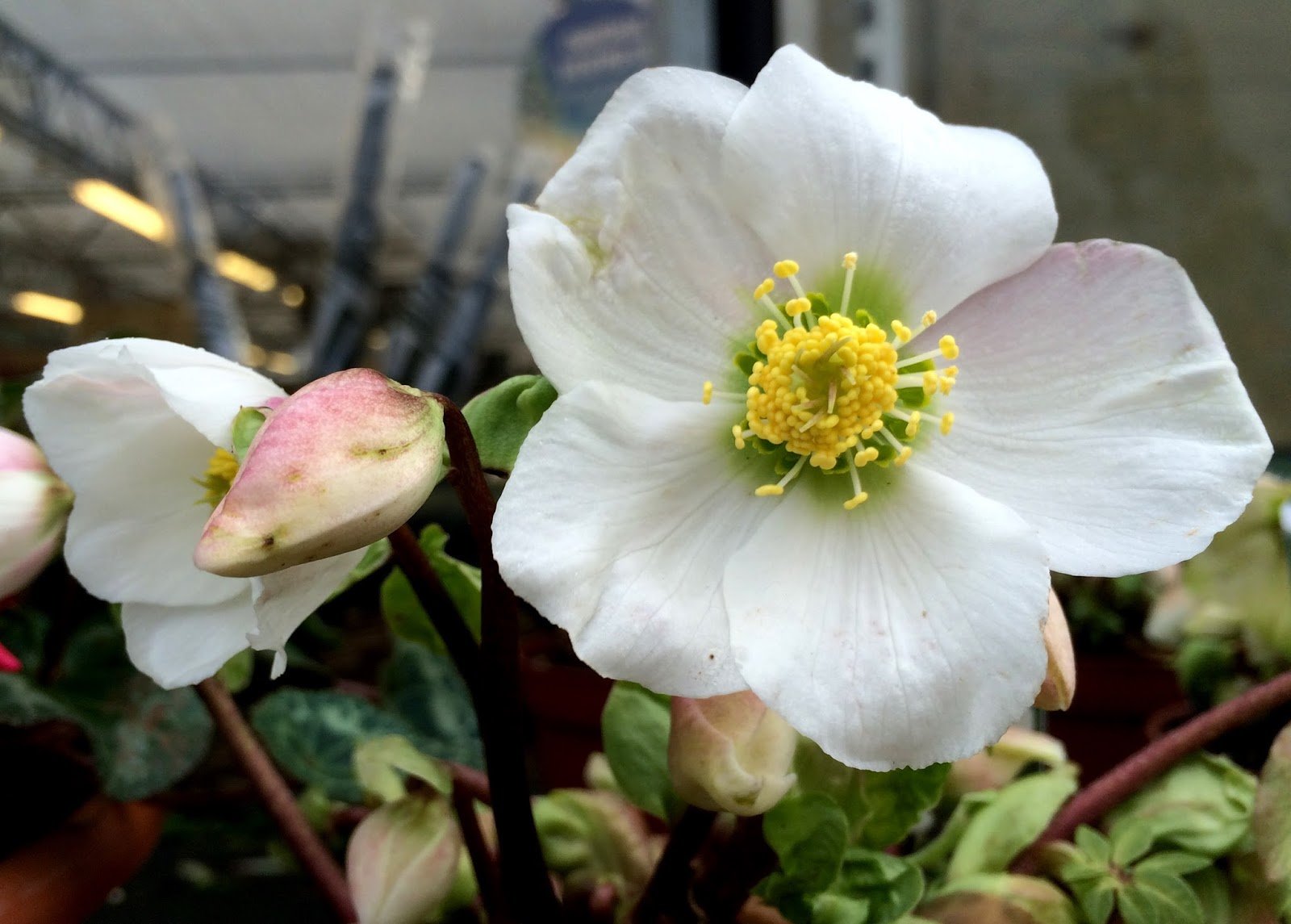
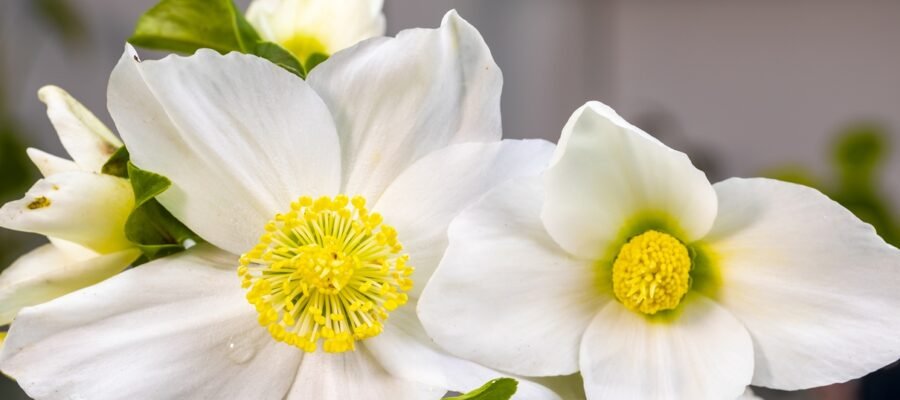
Hellebore is commonly known as “Christmas rose”, precisely because of its particularity bloom during the Christmas period and to have a flower similar to that of the dog rose. Surely their blooming even peeping out of the snow does nothing but amplify the wonder of this flower which, like a colorful snowdrop, gives us quite a spectacle.
It is part of the Ranunculaceae family.
In particular we refer to Hellebore niger and orientalis, these two varieties they typically bloom from early/mid winter to early/mid spring. The flowers are usually purple in the niger and white or cream/greenish in the orientalis.
Despite appearances it is a strong plant that manages to maintain a beautiful green foliage all year round. They are perennial plants, so they will continue to give us magnificent blooms for many years! Furthermore, towards spring they will become well liked by pollinators who often come to find its flowers.
Caring for Hellebore
Our beloved Christmas rose is not a too demanding plant, in fact, once it is settled you won’t have to try too hard to maintain it! It grows well both as a houseplant and as an outdoor plantjust make sure – outdoors – that you place it in a space large enough to guarantee good growth, year after year it will want to be more and more comfortable.
Light to give to Hellebore
Hellebore prefers displays of partial shade or screened light. If you keep it at home it is necessary to take it out every now and then to get some air, even a trip to the balcony will be enough. However, be careful never to expose it to direct sunlight, except for the warm winter morning rays that it may tolerate.
How much water to give the Christmas rose?
Newly planted Hellebore will need regular watering during spring through summer. However, even mature plants need a good amount of water during the warmer seasons. It is also recommended to mulch the soil with organic matter during periods of strong heat, in order to limit the dispersion of soil moisture.
For houseplants it is always necessary to ensure that the soil is kept moist down to the depths but absolutely beware of terrible water stagnation!
Land
They are comfortable in acidic, rich, moist and well-draining soil. For plants grown in pots, a mix of earth, peat, sand and coarse material is recommended to ensure good drainage.
Temperature
Hellebores are true winter plants and certainly do not fear frost or snow. In fact, they can survive without problems even at -20°C.
Fertilization
Normally if a plant is well kept and its soil is mulched it will rarely need further feeding. However, if poor growth is noted, it is possible to proceed by administering general fertilizer in spring.
However, as regards plants kept indoors, it is necessary to fertilize regularly with a well-balanced fertilizer or one with a high potassium content to encourage flowering.
Be careful with fertilization, an excess of nitrogen could cause beautiful foliage at the expense of non-existent blooms.
Propagation
Normally hellebore is propagated by division, an operation which is best carried out at the beginning of autumn but it is also possible to do it in spring, immediately after flowering.
Another possible method is from seed, sowing outdoors in mid to late summer. Be careful though, a preserved seed can prove difficult to germinate.
Problems
Hellebore is sensitive to aphids and leaf spots.
Furthermore, it can be subject to a very serious disease called “black death”, for which there is no cure, in this case we recommend destroying the plants to prevent the spread of the disease. Sometimes you may think that something is wrong with the posture of your Hellebores, this is because they will tend to bend until the flower touches the ground, but don’t worry, it is linked to the ambient light. The more light there is, the less they will bend, so all you have to do is wait for a nice sunny day!
Toxicity
Hellebore is an entirely poisonous plant, therefore it should be kept at a safe distance from children and animals.
In ancient times it was considered an excellent remedy for mental illnesses, because it is said that Hercules recovered from madness by eating the leaves of the Hellebore… well if you are not Greek it could prove to be a bad choice.
Language of flowers
Naturally, Hellebore is closely linked to the Christian tradition. In fact, it is said that at the very moment Jesus came into the world a small rose without thorns suddenly bloomed from the ground.
In fact, the name derives from “flower sacred to God” and “flower capable of freeing everyone from pain and suffering”, so much so that in India it is placed near women giving birth, as a sign of good omen for her and the child.
Ultimas Entradas Publicadas
4 reasons to adopt Philodendron brandtianum, the perfect houseplant!
Various models and big discounts in the summer sales: the deal of the day

Let’s talk about Christmas decorations
– Complete calendar of holidays and events

Our favorite seasonal rugs and design tips
The most inspiring Christmas gift perfumes 2025: ideas for him and her
Camellia sasanqua, winter flower – Online Plant Sales
What is happening to our Planet?
How to build a greenhouse for succulents: practical guide