Japanese horsetail (Equisetum japonica), also known as coarse-haired horsetail, is a charming and unique plant. Its simple appearance and strong vitality make it a popular decorative element for both indoor and garden use. Let’s learn more about this remarkable plant. First, let’s look at how to care for horsetail.
Characteristics of the winter horse
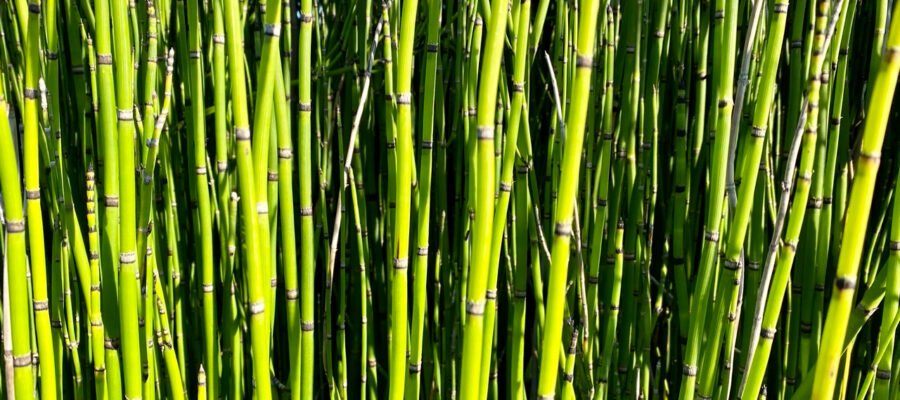
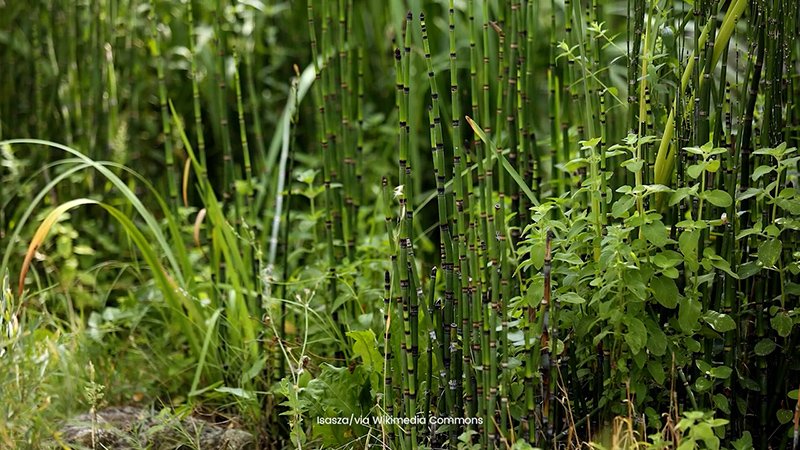
Equisetum hyemale is one of them marsh and evergreen plantsuitable for moist and cool soils. Although it may undergo slight deterioration in the colder seasons, its vegetation regenerates in spring with new shoots. Winter horsetail stands out for its hollow and rough stems (this is why the English also call it “rough grass”), characterized by a color that varies from from intense green to acid greenwith almost fluorescent reflections in the right light.
Thanks to its resistance, it is able to withstand temperatures up to -20°Cmaking it perfect for cold and humid environments. Not surprisingly, this plant is native to cold areas of Eurasia, including Greenland.
Where and how to grow Horsetail hyemale
Equisetum hyemale is a very versatile plant and adapts to different situations, both in the garden and indoors, as a houseplant. It can be used in wetlands such as streams, small lakes, mini ponds and bio-lakes, where its ability to phytoremediation helps keep water clean. In pots, it can be grown in hydroculture with expanded clay or in light, draining soil (I recommend my favourite: One plus), preferably with a system of pots with a water reserve to keep the humidity constant. The recommended immersion depth varies from the edge of the water to 10-15 cm below the water surface.
In summary:
In the garden
- Perfect for areas humidnear streams, lakes and ponds.
- Ideal for bio lakes and bio-poolswhere it performs an action natural phytoremediation.
- It resists sandy soils, but prefers fresh, moist soils.
In pot
- It can be grown in hydroculture with expanded clay or in light and draining soil.
- If grown in a pot with a water reserve, we can guarantee constant humidity.
- It is important to make sure that the cultivation pot has drainage holes to avoid water stagnation and root rot.
Exposure
Equisetum grows well in winter filtered light or partial shade. It can tolerate direct sun, but in the summer months one is preferable screen position. If the light is filtered by the foliage of a deciduous tree, the plant will benefit from it in summer, while in winter, with the fall of the leaves, it will be able to receive more light without risks. This is especially important in the warmer months, when direct sunlight could cause stress to the plant. If you have any doubts about how to evaluate light, here is the right article!
Temperature
As regards the need for protection from frost, we have seen that Horsetail hyemale resists very well even very low temperatures. Especially if you keep it in a pot, it will benefit from some protection in the cold months. If you want to move it under the porch or veranda, it will keep the vegetation healthier. However, if it is planted in the garden, one thing you can do optionally is mulch the surface of the soil with compost or dry leaves to protect it from frost.
Uses of Horsetail hyemale in interior design and landscaping
In recent years, Equisetum hyemale has become an item iconic in green decor. Thanks to his almost hypnotic verticalityit is often used for:
- Decorate Japanese style gardens.
- Decorate minimalist interiors with square planters and clean lines.
- Create barrier value in confined spaces.
- Beautify restaurants and offices with a touch of natural elegance.
Eat, spread it
The propagation of Equisetum hyemale can occur in two ways:
- Division of the rhizomes (easiest and fastest method): just separate the root portions and replant them. An operation that I recommend doing in spring, at the vegetative growth stage.
- Sporulation: more complex method which involves the collection and dispersion of the spores contained in the strobili at the top of the stems.
Curiosities about the winter Equisetum
- It’s part of pteridophytesa class of primitive plants that also includes ferns. These plants are vascular cryptogamswhich means they reproduce via spores rather than seeds and have conductive tissues for transporting water and nutrients. Pteridophytes are among the oldest plants on the planet, appearing approximately 400 million years agoin the Early Devonian.
- Its stems contain silicawhich gives it its characteristic roughness.
- It is used in the production of reeds for musical instruments like clarinets and saxophones.
Botany
Cryptogams are plants whose reproductive organs are hidden. They differ from more advanced plants such as gymnosperms (conifers) and angiosperms (flowering plants), whose reproductive organs are clearly visible. Horsetails reproduce by spores, which, after falling to the ground, form tiny structures called prothallia. Prothallia can be male or female. Female prothallia contain ovule tissue, while male prothallia contain seeds. With the presence of water, sperm swim to the ovule to fertilize it, thus forming a new plant. This migration of male gametes would be impossible without water. This partly explains the strong dependence of plants like ferns and horsetails on moist environments. This is an ancient tradition, typical of early terrestrial plants that had not completely lost their primal connection to the ocean (their place of origin).
Horsetails are vascular and bulbous plants, meaning they possess roots, stems, and leaves. They differ from bryophytes (such as mosses), which lack a true vascular system. They were among the first plants to begin growing vertically to compete with other species. This vertical growth forced them to develop systems for delivering plant sap (both natural and processed), enabling them to conquer the land and soon after the sky.
Ultimas Entradas Publicadas
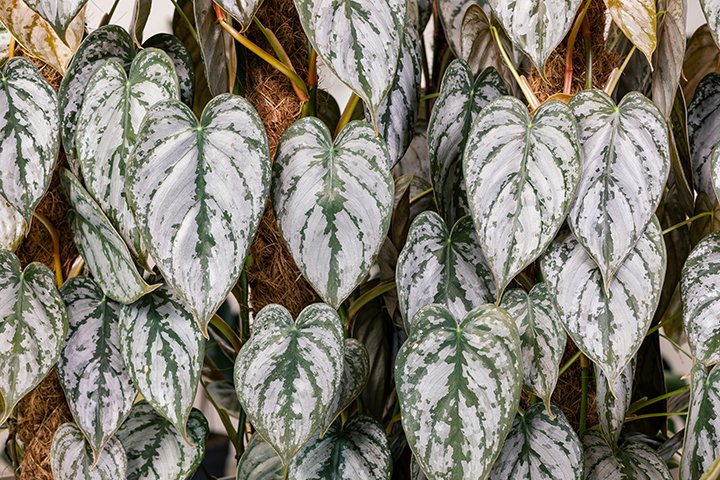
4 reasons to adopt Philodendron brandtianum, the perfect houseplant!
Various models and big discounts in the summer sales: the deal of the day

Let’s talk about Christmas decorations

– Complete calendar of holidays and events

Our favorite seasonal rugs and design tips
The most inspiring Christmas gift perfumes 2025: ideas for him and her
Camellia sasanqua, winter flower – Online Plant Sales
What is happening to our Planet?
How to build a greenhouse for succulents: practical guide