
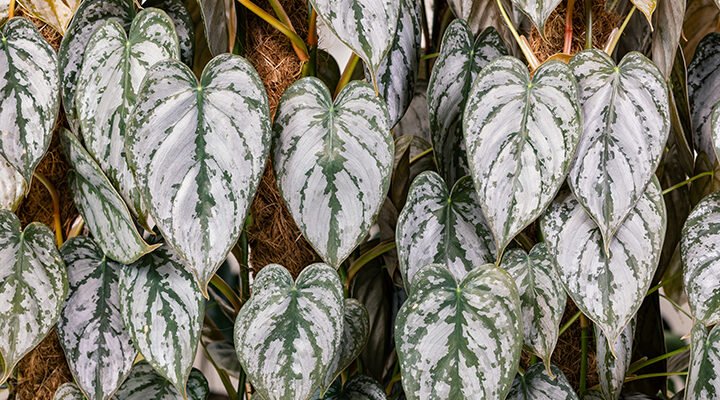
Today I present to you a perfect houseplant for any need: excellent in dimly lit environments but also in well-exposed areas of the house, falling or climbingelegant and full of secrets, but above all low maintenance. We are within the genre Philodendron but maybe you’ve never heard of him: it’s about the P. brandtianum. Here are 4 points that will convince you to make it part of your home jungle 😉
#MakeTheJungle
Philodendron brandtianum is part of the philodendrons and is also known as “silver leaf philodendron”, a name that suggests why this plant is becoming increasingly popular among houseplants.
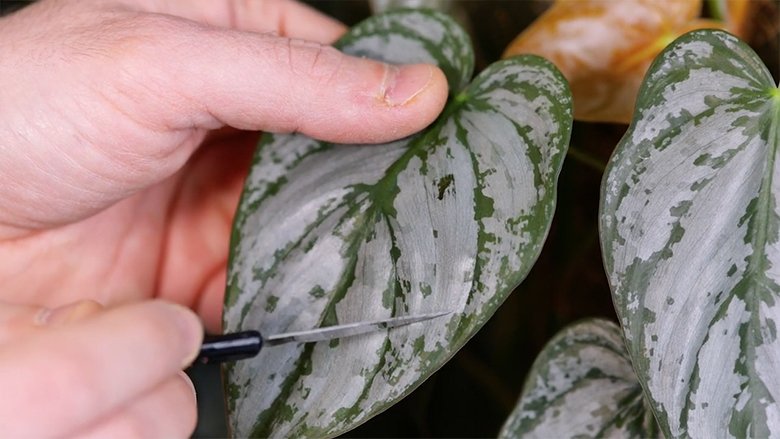
Care of Philodendron brandtianum
The silver-leaved philodendron is quite simple to grow with the right care, so let’s find out what it takes 😉
What exposure to give to Philodendron brandtianum
Philodendron brandtianum thrives in abundant, diffused lightpossibly screened in summer and direct in winter. It tolerates low light but will not grow as well, while direct light will damage the leaves.
What temperature does Philodendron brandtianum want
Philodendron brandtianum is a tropical plant and, as such, loves heat. He prefers temperatures between 20 and 30°C. It is very sensitive to frost, but already below 14°C it could start to suffer damage, this is important do not drop below 8-10°C.
It is also important to keep this plant away from radiators and air conditioners and, in general, avoid drafts.
Philodendron brandtianum also loves humidity, any value above 50% is suitable.
How to water Philodendron brandtianum
During i cold months water moderatelywhen the first centimeters of soil are dry. In the hot months, however, the Philodendron brandtianum is rather thirsty, so it is important to water it when needed, even frequently, always leaving a little moisture in the soil.
It would be better to try to avoid wetting the leaves during irrigation, sub-irrigation is recommended.
Which substrate to choose for Philodendron brandtianum
Soft and draining, in pots use a specific substrate for houseplants with draining aggregates, as always we recommend One and One plus.
Come and fertilize the Philodendron brandtianum
In spring and summer use fertilizer for green plants in the wetting water, a couple of times a month. In the cold months reduce frequency but do not suspend it.

When to repot Philodendron brandtianum
Philodendron brandtianum generally requires repotting every 2-3 years in fresh, well-nourished soil. If you recognize the cases we have told you about in this article, it may be advisable to anticipate repotting.
How to propagate Philodendron brandtianum
This plant can be propagated by cutting or air layering. Cuttings will grow easier in water.
How and when to prune Philodendron brandtianum
Philodendron brandtianum it is not a plant that requires major pruning worksit will be sufficient to often remove dead or dying leaves and stems. If desired, you can also keep it clean and compact through annual pruning, but avoid carrying out operations that are too invasive all at once or the plant could go into a sort of shock.
Parasites and diseases of Philodendron brandtianum
It can rarely be the subject of attacks by mites, in this case we recommend intervening in a natural way: 10 ml of Ottomix Oil, 10 ml of Propolis and 200 ml of Nettle Extract in a liter of water.
Philodendron brandtianum is not pet-friendly
Philodendron brandtianum contains a compound called calcium oxalate which makes it toxic (if ingested) for our four-legged friends and for humans themselves.
Problems of Philodendron brandtianum
The leaves turn yellow
This problem could be a sign that the plant needs more light.
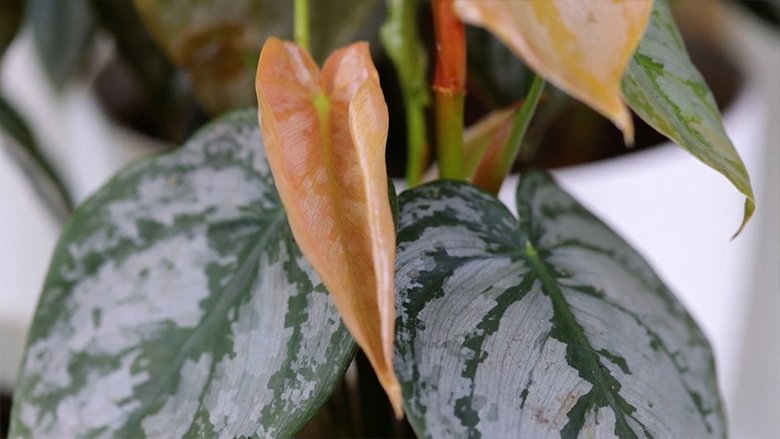
The tips of the leaves darken
The humidity may be too low, it is recommended to check that at least 50% humidity is reached in the environment.
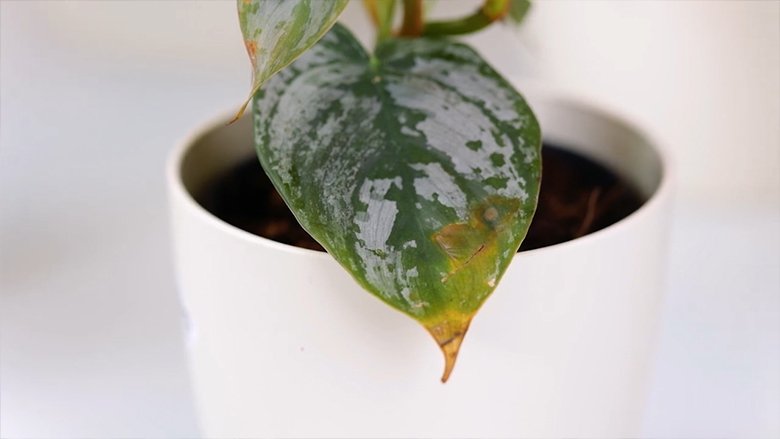
The leaves fall or curl inward
These are symptoms of water shortage, it is therefore necessary to increase watering, or it could be an excess of fertilization.
The leaves turn yellow
Yellow leaves generally indicate a problem with overwatering, but there can be other causes such as lack of drainage in the soil.
Another cause could be excess light.
Leaf spots
Brown, yellow or black spots on the leaves are a sign that usually indicates too much water on the leaves or a lack of ideal air circulation, or irregular watering.
We know the Philodendron brandtianum
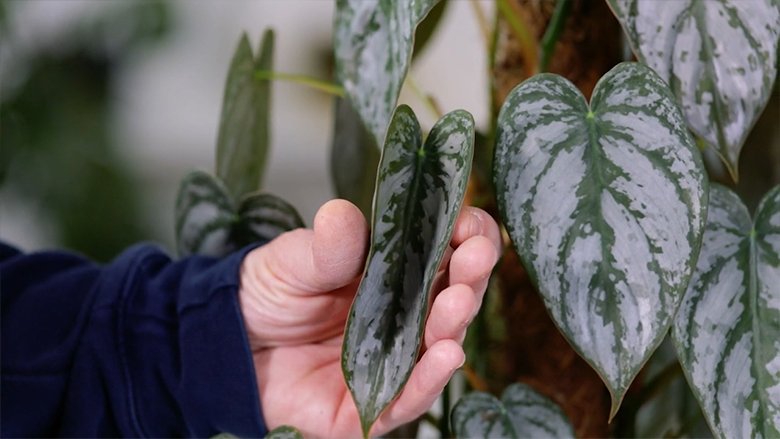
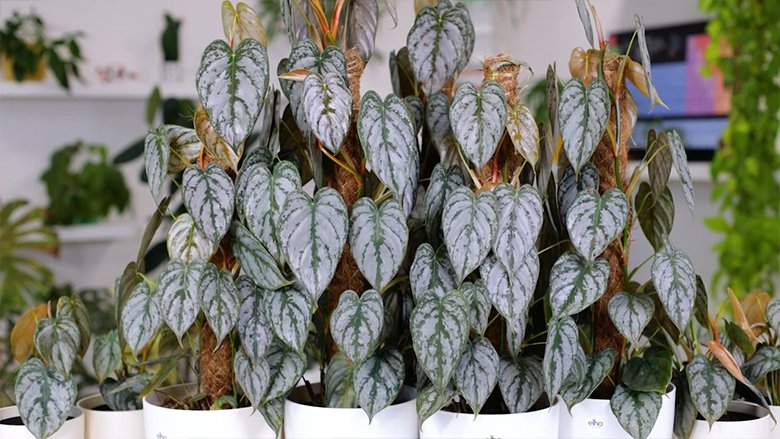
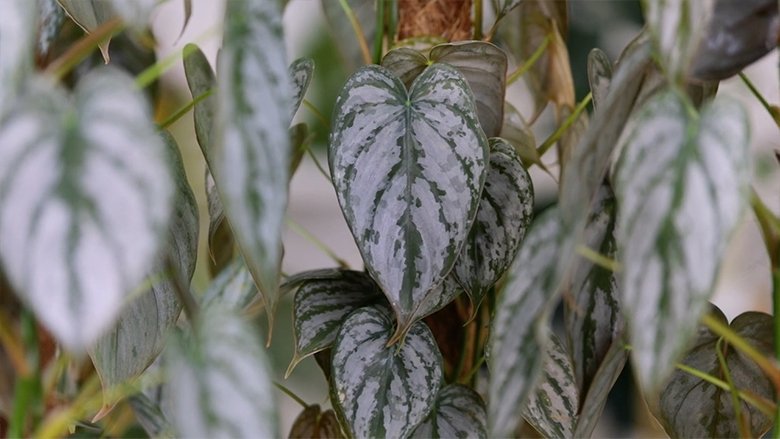
The Philodendron brandtianum plant is an evergreen, climbing houseplant. Very decorative, it develops thin stems, aerial roots and large heart-shaped leaves, olive green in colour, sprinkled with silver. The leaves are on average large from 10 to 17 cm, reaching approximately 30 cm at full maturity. It can be used as a hanging or made to climb on supportsmaking it an excellent piece of furniture. The plant reaches dimensions ranging from one meter to one and a half meters in an apartment, while in nature they can be much larger.
Philodendron brandtianum can grow in three forms:
- epiphytes – to take advantage of the elevated areas of the forest where it is easier to have extra light and humidity;
- on the ground – where, however, competition for nutrients, water and air is harsher;
- hemiepiphyte – when philodendrons grow as epiphytes, once they reach a certain size, they send aerial roots downwards, until they touch the ground where they can absorb nutrients and water.
As a climber it can be grown on a support, ideal in this case are mossy poles, which we have already told you about in this article.
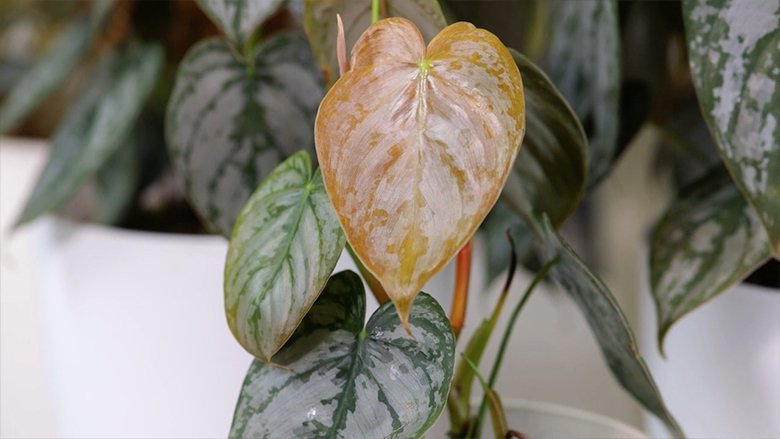
Taxonomic description
It is part of the Araceae family.
Habitat
Tropical rainforests of Central and South America and the West Indies, where they live in the shade of larger trees.
Curiosity
The particular name of “Philodendron brandtianum” was given to this plant in 1913 by Kurt Krause (1883-1963).