
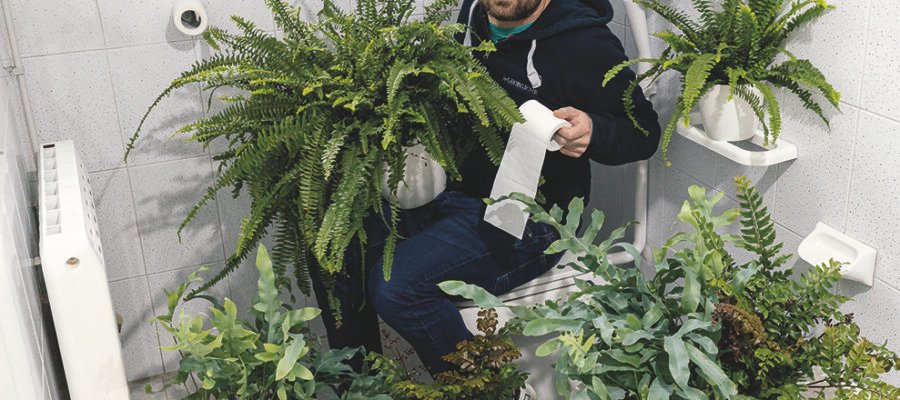
Perhaps when thinking about plants, the bathroom is not the first room where we would think of placing them, yet it can be a very hospitable place for them!
The steam from the hot shower and the turning on and off of the water in the sink translate into a high level of humidity and heat for the plants, which is a real dream for some green friends.
Nephrolepis exaltata, the Boston Ferce
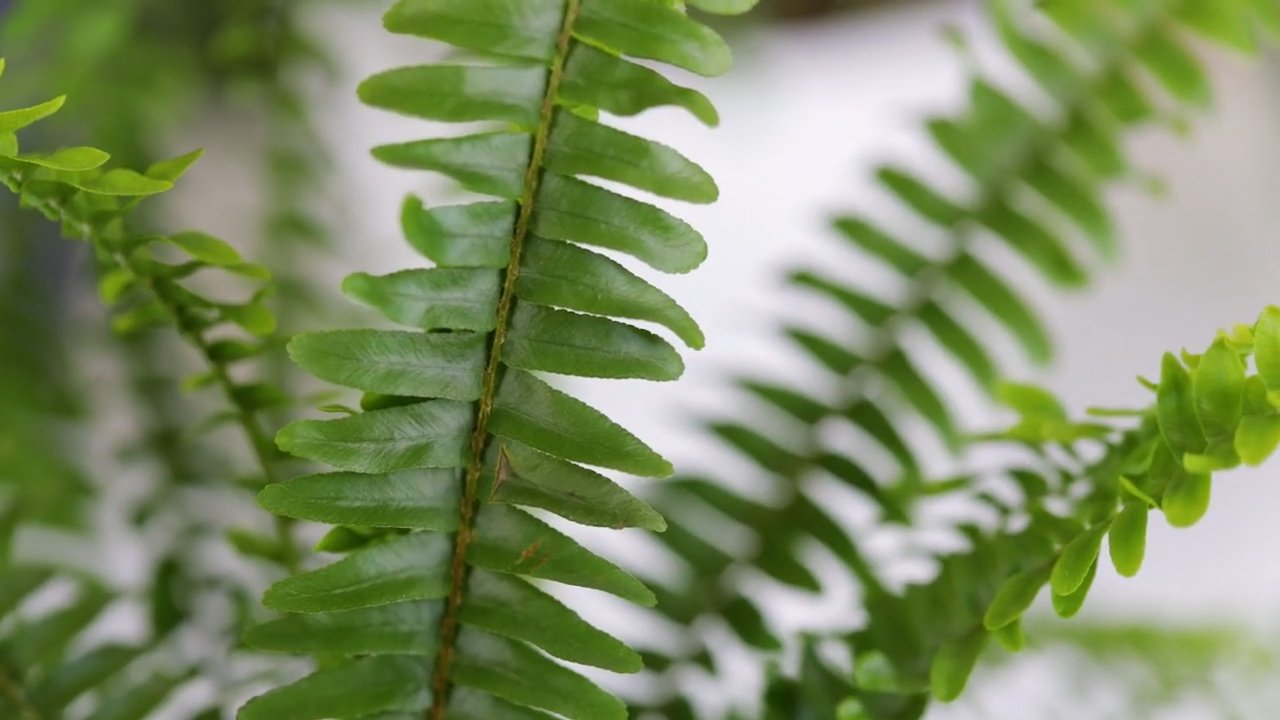
The first plant that we present to you, ready to decorate your bathroom, is the Nephrolepis exaltata, in particular today we present to you the Nephrolepis exaltata “Green Lady” also known as Boston Fern, if the name is not new to you it is all normal, in fact we had already talked about it in this article but let’s do a summary and understand why it will find its natural habitat (or almost) in the bathroom!
Considered one easy to care for plantNephrolepis exaltata is particularly appreciated for its compact shape, made up of green leaves, arched or erect, linear and slightly toothed, very in style #MakeTheJugle.
Nephrolepis exaltata plants seen from above
Let’s start by saying that they are plants sensitive to chemicals, smoke and air currents, this already suggests that the bathroom can be an ideal place.
The Boston Fern prefers one intense, indirect lightnot ensuring enough irradiation could result in the loss of the beautiful green of its leaves, but it usually manages to adapt best to the various light conditions. Its ideal temperature is between 18 and 25°, without going below 12°C or above 38°C.
Detail of an exalted Nefrolepis leaf
The soil must be kept consistently moist, but not waterlogged. Humidity is also important, as this plant thrives in high humidity – ideally 50-60%!
Reduce watering in winter, especially bottom watering. In summer, however, it loves plenty of moisture, even in the shower 😉
If you’re looking for the perfect potting mix for this plant, we recommend One+ or One – a rich, well-draining mix rich in organic matter.
In spring, we recommend applying a liquid fertilizer specifically for green plants (as always, we recommend Grandverde della Cifo). Spring is also an ideal time for repotting (if needed).
Cifo liquid fertilizer for green plants
Fortunately, the parasites that can prove to be a threat are not many, in fact, the only one we warn you about is the mite.
Bathroom plants: Blue Star Fern (Phlebodium “Blue Star”)
The second protagonist of this article is another old – but much appreciated – knowledge: the blue star fern, an ideal plant also for those who have little light at home, for any further information you can find the article dedicated to it here!
The Blue Star is one of the easiest ferns to keep indoorsas we were saying, it can also tolerate poor lighting, but if possible the ideal would be to give it a shielded and diffused light which will benefit the beautiful blue leaf livery of this plant.
Very particular aerial roots of the Blue Star Fern
Degrees are not a problem, Phlebodium Blue Star adapts easily to the climates of our homes, the important thing is to never drop below 10°C.
What may bother her instead is the drought, she always loves to have a bit of moisture in the soilwhile being careful not to exceed, sub-irrigation is recommended with this plant, especially in winter. In summer, however, Elho pots with water reserve or pots with integrated water tank are also excellent.
The beautiful Blue Star is native to the rainforests, this already tells us how much the humidity makes it feel at home, so what can we say? The bath is ready for her!
As regards substrate and fertilization, it is not a very demanding plant, a quality soil (such as One + or One) and half a dose of liquid fertilizer for green plants approximately once every two months in spring and summer will suffice.
Didymochlaena truncatula
And here we are at the last protagonist of this article! Last but not least, Didymochlaena truncatula, a plant native to the warm areas of tropical and southern Africa.
It is also part of the ferns, and it is one evergreen that loves moderate but diffused lightscreen of the periods with higher sunshine. In spring and summer it requires abundant watering and, as you may have understood, it loves particularly humid environments like the one that can be found in which room? But the bathroom of course
Compared to the other two plants we saw today it is more resistant to coldstaying above 10°C is ideal but it will also manage up to 5°C.
The soil should always be left with a little humidity, in autumn and winter it is better to wait until the first centimeters of soil are dry before watering again.
For fertilization it is ideal to give liquid fertilizer for green plants with NPK elements + microelements.
New frond of Didymochlaena truncatula”
THE pruning is very simplein fact, it is enough to do the minimum to maintain a tidy appearance: clean the dry parts and eliminate the dead parts to encourage new vegetation. Furthermore, it is recommended to repot it approximately every 2 years at the beginning of spring.